Hey there, fellow investor! If you’re anything like me, you’ve probably spent countless hours staring at stock charts, trying to make sense of the market. For years, I chased every hot tip and trend, only to find myself feeling… empty. And honestly, a little stressed. It wasn’t just about the numbers; it was about aligning my investments with my values. That’s when I discovered the world of Halal ETFs, and let me tell you, it’s been a game-changer for my peace of mind and my portfolio.
This isn’t just another dry financial article. This is my personal journey, complete with a few bumps and bruises (and one particularly painful mistake I’ll share later). I’m here to guide you through the best halal ETFs for 2026, comparing their ins and outs and sharing my honest opinions. We’ll also dive into something rarely discussed in finance: the profound connection between your financial well-being and your physical and mental health. Because let’s be real, what’s the point of wealth if you’re too stressed to enjoy it?
My Personal Failure: The “FOMO” Trap
Before I found my footing in ethical investing, I fell hard into the
classic “fear of missing out” (FOMO) trap. I remember vividly back in 2020, during the height of the meme stock craze. Everyone was talking about a particular stock, and the numbers were just skyrocketing. My friends were bragging about their overnight gains, and I felt like I was being left behind. Despite my gut telling me to stick to my long-term, value-based strategy, I caved. I poured a significant chunk of my savings into that one volatile stock, convinced I was going to be rich.
What happened next? You guessed it. The bubble burst. Hard. I watched in horror as my investment plummeted, losing a substantial amount of money in a matter of days. The stress was immense. I couldn’t sleep, I was constantly checking my phone, and my mood was terrible. It wasn’t just about the money; it was the feeling of betraying my own principles and succumbing to herd mentality. That experience taught me a harsh but invaluable lesson: chasing quick gains without a solid, ethical foundation is a recipe for disaster, not just for your wallet but for your peace of mind. It was a painful reminder that true wealth isn’t just about accumulation; it’s about alignment and sustainability.
The Hidden Cost of Financial Stress: Your Health
That personal failure wasn’t just a financial setback; it was a wake-up call about the profound impact money worries can have on our overall health. We often separate our finances from our well-being, but the truth is, they’re deeply intertwined. Authoritative medical sources have increasingly highlighted this critical connection.
Research published in the Journal of Family and Economic Issues emphasises a significant association between financial worries and psychological distress among adults [1]. This isn’t surprising when you think about it. Chronic stress, regardless of its source, can wreak havoc on your body. The University of Wyoming’s extension programme on financial stress notes that stress, in general, can contribute to serious health issues like heart attacks and strokes [2].
Columbia University Irving Medical Center further elaborates on this, stating that financial wellness is strongly correlated with good health. Conversely, financial stress, particularly a high debt-to-income ratio, puts both physical and mental health at significant risk [3]. This risk manifests in various ways:
•Mental Health: Increased anxiety, depression, and even panic attacks are common responses to financial strain [4]. The constant worry can lead to a feeling of helplessness and hopelessness.
•Sleep Disturbances: Financial stress often leads to restless nights, insomnia, and poor sleep quality, which in turn impacts cognitive function, mood, and physical health [4].
•Physical Health: Beyond the direct impact of stress hormones, financial worries can contribute to high blood pressure, weakened immune systems, and an increased risk of cardiovascular diseases [2] [3]. Some studies even link it to chronic pain and digestive issues.
My own experience with the FOMO stock reinforced this. The sleepless nights and constant anxiety were a direct result of my financial decisions. It made me realise that investing isn’t just about maximising returns; it’s about building a portfolio that allows you to sleep soundly at night, knowing your money is working in a way that aligns with your values and contributes to your overall well-being. This is where Halal investing truly shines.
What Makes an ETF “Halal”? More Than Just Money
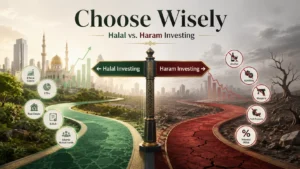
Before we dive into the specific ETFs, let’s quickly clarify what “Halal” investing actually means. It’s not just a niche market; it’s an ethical framework rooted in Islamic principles that guides investment decisions. The core idea is to invest in a way that is morally and socially responsible, avoiding practices considered harmful or unethical.
Here are the key principles that define a Halal ETF:
•Exclusion of Prohibited Industries: This is the most straightforward screen. Halal ETFs avoid companies involved in:
•Alcohol
•Tobacco
•Gambling
•Pork-related products
•Conventional banking and insurance (due to interest-based transactions)
•Adult entertainment
•Weapons manufacturing (though some interpretations may vary)
•Financial Ratios Screening: Companies must meet certain financial health criteria to ensure they aren’t overly reliant on interest-based debt. Common ratios include:
•Debt to assets (usually below 33%)
•Cash and interest-bearing securities to assets (usually below 33%)
•Accounts receivables to assets (usually below 49%)
•Income Purification (Zakat): If a company has a small percentage of non-compliant income (e.g., from interest on cash holdings), a portion of the dividends received from that company must be purified by donating it to charity. Many Halal ETFs provide a purification ratio to help investors calculate this.
•Ethical Governance: Some Halal funds go a step further, incorporating broader ethical screens, such as avoiding companies with human rights violations or poor environmental records. This aligns with the holistic view of ethical conduct in Islam.
For me, this framework isn’t just about religious compliance; it’s about investing with a conscience. It’s about building wealth in a way that contributes positively to society, rather than supporting industries that cause harm. It brings a sense of purpose to my financial decisions that I never found chasing meme stocks.
The Landscape of Halal ETFs in 2026: A Quick Overview
Finding truly Halal ETFs used to be a challenge, but thankfully, the market has matured significantly. For 2026, we have several solid options, each with its own strengths and nuances. It’s important to remember that while all these funds aim for Shariah compliance, their screening methodologies, geographic focus, and expense ratios can differ.
Here’s a quick glance at some of the top contenders we’ll be diving into:
| ETF Ticker | Name | Focus | Expense Ratio | AUM (approx.) | Key Differentiator |
| MNZL | Manzil Russell Halal USA Broad Market ETF | US Large & Mid-Cap | 0.40% | $50M | Lowest fee, broadest US exposure, human rights screen |
| SPUS | SP Funds S&P 500 Shariah Industry Exclusions ETF | US Large Growth | 0.45% | $2.1B | Largest AUM, S&P 500 Shariah Index |
| HLAL | Wahed FTSE USA Shariah ETF | US Large Growth | 0.50% | $752M | Strong brand, FTSE USA Shariah methodology |
| IGDA | Invesco Dow Jones Islamic Global Developed Markets UCITS ETF | Global Large Growth | 0.40% | $1.1B | Global diversification, competitive fee |
| SPSK | SP Funds Dow Jones Global Sukuk ETF | Global Bond (Sukuk) | 0.55% | $0.5B | Only US-listed Sukuk ETF |
Note: Data is approximate and subject to change. Always verify the latest information from the fund provider’s official website before making any investment decisions. Past performance is not indicative of future results.
Deep Dive: Comparing the Best Halal ETFs for 2026
Now, let’s get into the nitty-gritty. Choosing the “best” ETF isn’t a one-size-fits-all decision. It depends on your investment goals, risk tolerance, and whether you prioritise lower fees, broader diversification, or specific geographic exposure. Here’s my take on the top Halal ETFs for 2026, based on my research and personal investment philosophy.
1. MNZL: The New Kid on the Block with a Broad Vision
Manzil Russell Halal USA Broad Market ETF (MNZL)
•Expense Ratio: 0.40%
•AUM: ~$50M (as of mid-2026)
•Holdings: ~461
•Focus: US Large & Mid-Cap
MNZL is a relatively new entrant, launched in late 2025, but it’s quickly become my top pick for US equity exposure. Why? It wins on three crucial fronts:
•Lowest Fee: At 0.40%, it boasts the lowest expense ratio among US-focused Halal equity ETFs. In investing, every basis point saved is a basis point earned, especially over the long term.
•Broadest Diversification: Unlike many other Halal ETFs that focus solely on large-cap stocks, MNZL tracks the Russell 1000, giving you exposure to both large and mid-cap US companies. With around 461 holdings, it offers significantly more diversification than its peers. This broader market exposure can lead to more stable returns and capture growth from a wider range of companies.
•Enhanced Ethical Screening: This is where MNZL truly stands out for me. Beyond standard AAOIFI-based Shariah screens, it incorporates an additional ethical layer from the American Friends Service Committee (AFSC). This means it actively excludes companies linked to human rights violations, apartheid, or genocide. For an investor like me, who prioritises ethical alignment, this is a huge plus. It’s not just Halal; it’s conscientious.
My Opinion: While it’s newer and has a smaller AUM, MNZL’s combination of low fees, broad diversification, and a strong ethical overlay makes it a compelling choice for a core US equity holding in 2026. It’s a testament to how the Halal investing space is evolving to meet more nuanced ethical demands.
2. SPUS: The Established Leader for S&P 500 Exposure
SP Funds S&P 500 Shariah Industry Exclusions ETF (SPUS)
•Expense Ratio: 0.45%
•AUM: ~$2.1B (as of mid-2026)
•Holdings: ~210
•Focus: US Large Growth
SPUS has been a cornerstone of Halal investing for a while now, and for good reason. It’s the largest Halal ETF by AUM, giving it excellent liquidity and stability. It tracks a Shariah-compliant version of the S&P 500, focusing on large US companies that pass its screens.
•Largest AUM: Its significant assets under management mean it’s well-established and less prone to closure, offering peace of mind.
•S&P 500 Alignment: For those who want exposure to the performance of the S&P 500 while remaining Shariah-compliant, SPUS is the go-to. It has a strong track record, even outperforming the conventional S&P 500 since its inception in late 2019 [5].
•Competitive Fee: At 0.45%, its expense ratio is competitive within the Halal ETF space, though still higher than conventional index funds.
My Opinion: SPUS is a solid, reliable choice, especially if you want a direct, Shariah-compliant proxy for the S&P 500. Its size and track record are reassuring. However, its concentration in large-cap tech can be a double-edged sword, offering high growth potential but also higher sector-specific risk. It’s a great option, but I personally lean towards MNZL for its broader diversification and deeper ethical screening.
3. HLAL: The Wahed Option for US Large Growth
Wahed FTSE USA Shariah ETF (HLAL)
•Expense Ratio: 0.50%
•AUM: ~$752M (as of mid-2026)
•Holdings: ~200
•Focus: US Large Growth
HLAL, offered by Wahed Invest, is another prominent player in the US Halal equity market. It tracks the FTSE USA Shariah Index and has a substantial AUM, making it a liquid and well-recognised option.
•Strong Brand Recognition: Wahed is a well-known name in Islamic finance, which can provide comfort to investors.
•FTSE USA Shariah Methodology: It follows a robust screening methodology, audited quarterly by an international Shariah consultancy [6].
•Similar Exposure to SPUS: Like SPUS, HLAL is heavily weighted towards large-cap US growth stocks, particularly in the technology sector.
My Opinion: HLAL is a perfectly viable option, very similar to SPUS in its investment profile. The slightly higher expense ratio (0.50% vs. 0.45% for SPUS) is a minor drawback, but its strong brand and consistent Shariah oversight are definite positives. If you’re already a Wahed customer or prefer the FTSE index methodology, HLAL is a good choice. For me, the slight fee difference and MNZL’s broader diversification make it a secondary option.
4. IGDA: Your Passport to Global Halal Growth
Invesco Dow Jones Islamic Global Developed Markets UCITS ETF (IGDA)
•Expense Ratio: 0.40%
•AUM: ~$1.1B (as of mid-2026)
•Holdings: Diversified across developed markets
•Focus: Global Large Growth
For investors looking beyond US borders, IGDA is an excellent choice for global diversification. It tracks the Dow Jones Islamic Market Developed Markets Index, giving you exposure to Sharia-compliant companies across the developed world.
•Global Diversification: This is IGDA’s biggest strength. It allows you to spread your investments across various developed economies, reducing reliance on a single market.
•Competitive Fee for Global Exposure: At 0.40%, its expense ratio is very competitive for a globally diversified Halal ETF, especially considering the complexities of international screening.
•Strong Performance: It has shown strong performance, even slightly outperforming the S&P 500 since its inception in 2022, which is impressive for a global fund [5].
My Opinion: If you’re building a truly diversified portfolio, IGDA is a must-have. Relying solely on US markets, even Halal ones, can limit your growth and increase your risk. IGDA provides that crucial international exposure with a reasonable fee and solid performance. It’s a key component of my own diversified Halal portfolio.
5. SPSK: The Only Fixed-Income Halal Option (Sukuk)
SP Funds Dow Jones Global Sukuk ETF (SPSK)
•Expense Ratio: 0.55%
•AUM: ~$0.5B (as of mid-2026)
•Holdings: ~170 (Sukuk)
•Focus: Global Bond (Sukuk)
For investors seeking fixed-income exposure while remaining Shariah-compliant, SPSK is currently the only US-listed option. It invests in Sukuk, which are Islamic financial certificates often described as “Shariah-compliant bonds”.
•Unique Offering: If you need to diversify your portfolio with fixed income that adheres to Islamic principles, SPSK is your only direct ETF choice in the US market.
•Global Sukuk Exposure: It provides access to the global Sukuk market, offering diversification away from equities.
My Opinion: While essential for fixed-income diversification in a Halal portfolio, SPSK comes with a higher expense ratio (0.55%), and its performance can be more subdued, as is typical for bond funds. It’s not a growth engine but a stability anchor. It’s a necessary component for a balanced Halal portfolio, but don’t expect it to shoot the lights out. It’s there for capital preservation and income, not aggressive growth.
Building Your Halal Portfolio: My Strategy
So, how do I put all this together? My personal strategy for 2026 focuses on diversification, low costs, and deep ethical alignment. It’s a blend of the ETFs we’ve discussed, tailored to my long-term goals:
•Core US Equity: I use MNZL for my primary US equity exposure. Its broad market coverage and enhanced ethical screening align perfectly with my values and desire for diversification. The lower fee is a bonus that compounds over time.
•Global Equity: IGDA is my go-to for international diversification. It ensures I’m not overly reliant on the US market and captures growth opportunities from developed markets worldwide.
•Fixed Income: SPSK provides the necessary stability and capital preservation for the fixed-income portion of my portfolio. It’s not exciting, but it’s crucial for risk management.
•Smaller Allocations (Optional): Depending on market conditions and my risk appetite, I might consider smaller allocations to SPUS or HLAL if I want more concentrated exposure to large-cap US tech, but these are supplementary, not core.
This approach allows me to build a robust, diversified, and ethically aligned portfolio that helps me sleep soundly at night. It’s about investing with purpose, not just profit.
Frequently Asked Questions (FAQ)
Here are some common questions I get about Halal ETFs and ethical investing:
Q: Are Halal ETFs really Shariah-compliant?
A: Yes, reputable Halal ETFs are screened by Shariah advisory boards or follow established Shariah-compliant indices (like FTSE Shariah or Dow Jones Islamic Market Index). These boards ensure the underlying companies and financial ratios adhere to Islamic principles. However, screening methodologies can vary slightly between funds, so it’s always good to check the specific fund’s prospectus.
Q: Do Halal ETFs underperform conventional ETFs?
A: Not necessarily. While some may have slightly higher expense ratios due to the specialised screening, many Halal ETFs, like SPUS and IGDA, have demonstrated competitive and, in some cases, even superior performance compared to conventional benchmarks over certain periods [5]. Ethical investing doesn’t mean sacrificing returns.
Q: What about purification of dividends?
A: Most Halal equity ETFs will have a small percentage of non-compliant income (e.g., from interest on cash holdings). They typically provide a “purification ratio” in their annual reports. As an investor, you are then expected to donate that small portion of your dividends to charity to purify your earnings. It’s a simple process that ensures your investment remains fully compliant.
Q: Can I build a diversified portfolio with only Halal ETFs?
A: Absolutely! With the growing number of halal ETFs covering US equities (MNZL, SPUS, and HLAL), global equities (IGDA), and fixed income (SPSK), you can construct a well-diversified portfolio that meets your financial goals and ethical requirements. You might need to combine a few different funds to achieve optimal diversification.
Q: Are Halal ETFs suitable for non-Muslim investors?
A: Yes! Many non-Muslim investors are drawn to Halal ETFs because of their strong ethical screening, which often aligns with broader ESG (Environmental, Social, and Governance) investing principles. If you’re looking for investments that avoid harmful industries and promote financial responsibility, Halal ETFs can be an excellent choice, regardless of your faith.
Conclusion: Invest with Purpose, Live with Peace
My journey through the world of investing has taught me that true wealth isn’t just about the size of your portfolio; it’s about the peace of mind that comes from aligning your financial decisions with your deepest values. The stress of chasing fleeting gains, as I painfully learned, can take a toll on your health and happiness.
Halal ETFs offer a powerful solution: a way to build wealth ethically, responsibly, and with a clear conscience. They provide access to diversified markets while adhering to principles that promote social good and financial stability. By choosing funds like MNZL, SPUS, HLAL, IGDA, and SPSK, you’re not just investing in companies; you’re investing in a future that reflects your values.
Remember, financial peace of mind is a cornerstone of overall well-being. By making informed, ethical investment choices, you’re not just securing your financial future; you’re contributing to a healthier, more purposeful life. So, take a deep breath, do your research, and start building a portfolio that truly serves you, body and soul. Here’s to a prosperous and peaceful 2026!
References
1. Ryu, S., & Fan, L. (2022). The Relationship Between Financial Worries and Psychological Distress Among U.S. Adults. Journal of Family and Economic Issues, 44(1), 16–33. https://pmc.ncbi.nlm.nih.gov/articles/PMC8806009/
2. University of Wyoming Extension. (n.d.). Financial Stress and Your Health. https://www.uwyo.edu/uwe/programs/money/saving-investing/financial-stress-and-your-health.html
3. Columbia University Irving Medical Center. (2024, June 18). The Link Between Health and Financial Well-Being. https://www.cuimc.columbia.edu/news/link-between-health-and-financial-well-being
4. Everyday Health. (n.d.). Financial Stress Can Be Bad for Your Health. https://www.everydayhealth.com/wellness/united-states-of-stress/financial-stress-wellness-understanding-problem/
5. Amal Invest. (2026, January 12). Halal ETFs 2026: Best Shariah-Compliant Funds Compared (Fees & Performance). https://amalinvest.com/halal-investing/halal-etfs-compared
6. Zoya Finance. (2026, January 15). Best Halal ETFs to Buy in 2026. https://blog.zoya.finance/best-halal-etfs/