
Early retirement in 2026 is achievable with the right financial planning strategy and smart wealth decisions made today. This guide is for ambitious savers, career professionals, and anyone ready to take control of their financial future through strategic retirement planning.
Recent legislative changes have created new opportunities for tax savings and retirement account optimization that could accelerate your path to financial independence. Smart wealth planning now means understanding how to leverage these changes while building multiple income streams and protecting your assets from unexpected costs.
We’ll show you how to maximize tax savings through recent legislative changes that could put thousands back in your pocket. You’ll learn to optimize your retirement accounts with strategies like Roth conversions and smart withdrawal timing. We’ll also cover how to secure predictable income sources that provide financial stability, protect against healthcare and long-term care costs that could derail your plans, and build a comprehensive retirement blueprint tailored to your goals.
The decisions you make in 2026 could determine whether you retire comfortably in your 50s or work well into your 60s. Let’s explore the actionable strategies that can make early retirement your reality.
Maximize Tax Savings Through Recent Legislative Changes
Leverage the Quadrupled SALT Deduction Cap of $40,000
Between 2025 and 2029, the state and local tax (SALT) deduction cap has increased dramatically from $10,000 to $40,000, representing a quadrupling of the previous limit. This significant change provides meaningful tax relief for retirees, particularly those living in high-tax states where property taxes and state income taxes can substantially impact retirement income.
The enhanced SALT deduction increases by 1% annually until 2030, offering predictable growth in this valuable deduction. For retirement planning purposes, this change allows you to deduct a much larger portion of your property taxes, state income taxes, and local taxes, directly reducing your taxable income and increasing your spendable retirement funds.
It’s important to note that income over $500,000 triggers a reduction in this deduction. However, the deduction won’t fall below the original $10,000 floor, ensuring that even high-income retirees maintain some benefit from this provision.
Claim the New $6,000 Senior Deduction for Ages 65+
From 2025-2028, taxpayers aged 65 and older can claim an additional $6,000 deduction, while married couples filing jointly where both spouses meet the age requirement can deduct $12,000. This bonus deduction represents a significant opportunity for financial planning during retirement years.
This extra deduction serves multiple strategic purposes beyond simple tax reduction. It can help lower your overall taxable income, potentially reducing Medicare premiums that are income-based. Additionally, this deduction creates favorable opportunities for Roth conversions at more attractive tax rates, allowing you to convert traditional IRA funds while minimizing the tax impact.
The phase-out for this deduction begins at $75,000 for single filers and $150,000 for joint filers, making it accessible to a broad range of retirees while targeting benefits toward those who need them most.
Reconsider Itemizing Deductions for Greater Tax Benefits
With the SALT deduction cap now at $40,000 and the additional senior deduction available, many retirees should reassess whether itemizing deductions provides greater tax benefits than taking the standard deduction. The current standard deduction amounts to $16,100 for single filers and $32,200 for joint filers in 2026.
The strategic approach of “bunching” charitable contributions into specific years can help exceed the standard deduction threshold. By concentrating donations into one tax year perhaps through a donor-advised fund you can maximize the benefit of itemized deductions while supporting your charitable goals. This strategy works particularly well when combined with the higher SALT deduction cap, as the combination of property taxes, state taxes, and charitable contributions can easily exceed the standard deduction.
For retirees with significant property taxes or those living in high-tax states, the enhanced SALT deduction alone may bring itemized deductions close to or above the standard deduction threshold, making additional charitable contributions or other itemizable expenses more valuable.
Navigate Updated Charitable Giving Rules and Limitations
The recent legislative changes have created new opportunities and considerations for charitable giving in retirement. Non-itemizers who make charitable contributions can now deduct an additional $1,000 for singles or $2,000 for married couples filing jointly, beginning in tax year 2026. This allows charitable-minded retirees to benefit from an additional deduction without filing a more complex itemized tax return.
For those who choose to itemize and make charitable contributions, new limitations apply. Only contributions exceeding 0.5% of your adjusted gross income (AGI) are deductible, and the maximum tax benefit from those deductions is limited to 35%. These changes require more strategic thinking about the timing and structuring of charitable giving.
Qualified charitable distributions (QCDs) from IRAs remain an excellent strategy for retirees age 73 and older, allowing you to satisfy required minimum distributions tax-free while supporting charitable causes. This approach can be particularly valuable when combined with other tax strategies, as it reduces your AGI without requiring itemization of deductions.
Optimize Your Retirement Account Strategies
Execute Strategic Roth Conversions During Market Downturns
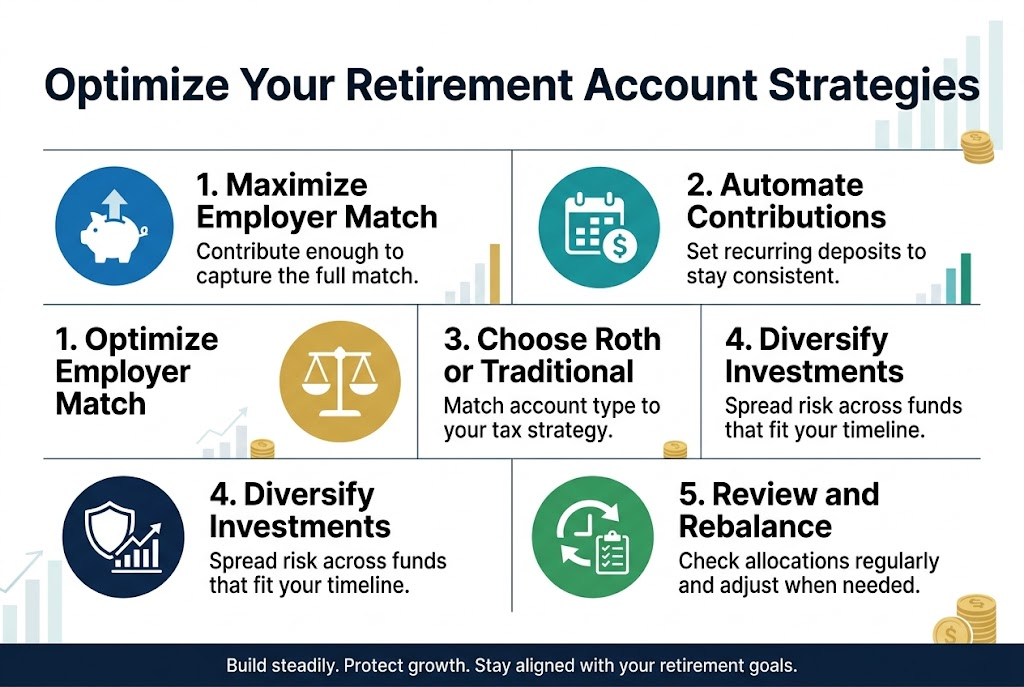
Market downturns present unique opportunities for strategic Roth conversions that can significantly enhance your long-term retirement income. When your traditional retirement account values decline, converting to a Roth IRA becomes more tax-efficient since you’re paying taxes on a lower account value. This timing strategy allows you to move assets from tax-deferred accounts to tax-free growth vehicles while minimizing the immediate tax impact.
The key advantage lies in the recovery potential—once converted, all future growth in your Roth account becomes tax-free. If your investments rebound after the conversion, you’ve effectively transferred that recovery growth to a tax-free environment. Consider your current tax bracket and projected future rates when evaluating conversion opportunities, as you’ll pay ordinary income taxes on the converted amount in the year of conversion.
Plan Required Minimum Distribution Timing to Minimize Taxes
Starting at age 73 (rising to 75 in 2033), tax-deferred retirement accounts require minimum distributions that continue throughout your lifetime. Strategic RMD planning becomes crucial for managing your overall tax burden during retirement. If you fail to meet RMD requirements, you’ll face a substantial 25% excise tax penalty on the shortfall amount.
Workplace accounts like 401(k)s and 403(b)s may allow you to defer distributions while still working, providing additional flexibility for high earners who want to delay their tax obligations. Roth IRAs and Roth 401(k)s don’t have RMD requirements, making them valuable tools for estate planning and tax management. You can always withdraw more than the required minimum, which may be beneficial in years when you’re in lower tax brackets.
Increase Contribution Amounts Before Retirement
Maximizing contributions to your retirement accounts in the years leading up to retirement can significantly impact your financial security. Both traditional and Roth accounts offer substantial contribution limits that increase with age through catch-up contributions. The reference content emphasizes the importance of understanding how different account types—workplace savings plans, IRAs, and brokerage accounts—impact your taxes differently during retirement.
Building substantial balances across multiple account types provides greater flexibility for tax-efficient withdrawal strategies. Traditional accounts offer immediate tax deductions but create future tax obligations, while Roth contributions use after-tax dollars but provide tax-free retirement withdrawals. Diversifying across account types creates options for managing your tax liability throughout retirement.
Develop Tax-Efficient Withdrawal Sequencing
The traditional approach of withdrawing first from taxable accounts, then tax-deferred accounts, and finally Roth accounts may not always be optimal. A proportional withdrawal strategy often produces better results by spreading taxable income more evenly throughout retirement, potentially reducing lifetime taxes and extending portfolio longevity.
For retirees with substantial long-term capital gains, using taxable accounts first while staying within the 0% capital gains tax bracket can be highly beneficial. Single filers with taxable income up to $48,350 qualify for the 0% long-term capital gains rate in 2025. This strategy allows you to harvest gains tax-free while preserving assets in more tax-efficient accounts longer.
| Withdrawal Strategy | Tax Impact | Portfolio Longevity | Best For |
|---|---|---|---|
| Traditional Sequential | High tax bump mid-retirement | Shorter duration | Simple planning preference |
| Proportional | Steady, lower tax burden | Extended duration | Most retirees |
| Taxable-First with Gains Harvesting | Minimized capital gains taxes | Optimized for large gains | High-net-worth investors |
The proportional approach can reduce total retirement taxes by over 40% compared to sequential withdrawals while extending portfolio life by approximately one year. This strategy also helps minimize taxes on Social Security benefits and Medicare premiums by keeping annual income more consistent. Your withdrawal strategy should consider your taxable income level, withdrawal needs, asset distribution across account types, and expected retirement duration.
Secure Predictable Income Sources for Financial Stability
Evaluate Fixed Income Annuity Options
Fixed income annuities represent a cornerstone of guaranteed retirement income planning, providing the foundation for financial stability throughout your retirement years. Research demonstrates that retirees who hold a larger portion of their wealth in guaranteed income actually spend more than retirees who hold equal wealth in traditional investments. This spending confidence stems from the predictable nature of annuity payments, which function similarly to a protected paycheck.
When evaluating annuity options, consider products that offer benefit bases guaranteed to increase by 10% of total purchase payments annually for up to ten years, or until benefit election occurs. This growth potential, combined with the security of guaranteed payments, creates a powerful tool for long-term financial planning. All guarantees depend on the claims-paying ability and financial strength of the issuing company, making carrier selection crucial to your retirement strategy.
Time Your Social Security Benefit Claims Strategically
Strategic timing of Social Security benefits requires careful consideration of your overall retirement income portfolio. The security of guaranteed income sources, including Social Security, reduces stress from market volatility and creates confidence in your spending decisions. With life expectancy for individuals age 62 extending significantly, optimizing the timing of these benefits becomes increasingly important for maximizing lifetime income.
The emotional benefits of secured Social Security timing cannot be understated. When combined with other guaranteed income sources, properly timed Social Security benefits provide the psychological comfort that encourages appropriate retirement spending rather than excessive conservation due to market fears.
Create Guaranteed Income to Cover Essential Expenses
Building guaranteed income specifically for essential expenses forms the bedrock of sound retirement planning. The budgetary advantages of guaranteed income become particularly valuable as clients age, since automating a budget with predictable payments helps reduce the risk of financial mistakes due to cognitive impairments that may develop over time.
Essential expense coverage through guaranteed income provides both financial and emotional security. This approach allows retirees to feel more comfortable spending money on their desired lifestyle, knowing their fundamental needs are protected regardless of market conditions. The combination of guaranteed income sources creates a stable foundation that supports confident decision-making throughout retirement.
Reduce Market Volatility Impact on Retirement Spending
Market volatility poses significant risks to retirement spending patterns, making guaranteed income sources essential for maintaining consistent lifestyle funding. The security of protected income streams lessens the stress of market ups and downs, enabling retirees to maintain their spending plans despite economic uncertainty.
Guaranteed income serves as a buffer against market volatility, providing stability that allows for more aggressive growth strategies with remaining assets. This balanced approach combines the security of predictable income with the growth potential necessary for long-term wealth preservation. The emotional comfort provided by guaranteed income often translates into better overall financial decisions, as retirees can focus on lifestyle goals rather than daily market fluctuations.
By implementing a comprehensive guaranteed income strategy, you create the foundation for both financial stability and peace of mind throughout your retirement journey.
Protect Your Health and Long-Term Care Needs
Assess Long-Term Care Insurance Requirements
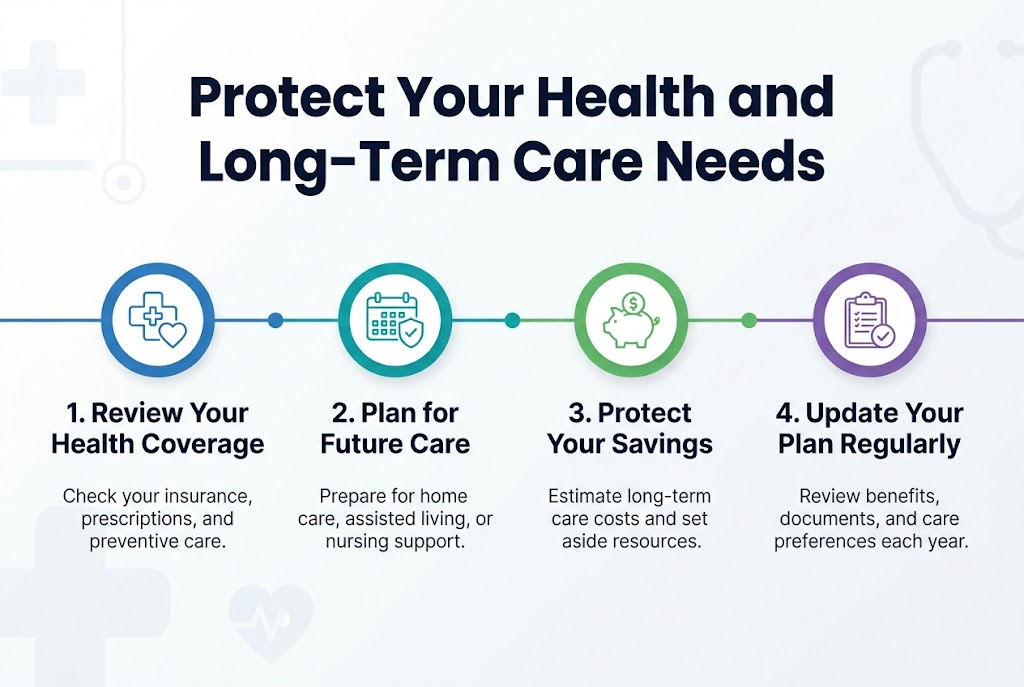
Traditional Medicare doesn’t cover long-term care services, leaving a significant gap in your retirement healthcare planning. Long-term care encompasses both medical and non-medical assistance for individuals with chronic illnesses or disabilities, including help with activities of daily living such as bathing, dressing, eating, toileting, and transferring. You’ll pay 100% for these non-covered services, making long-term care insurance a critical component of your financial planning strategy.
Three primary types of long-term care insurance are available to protect your retirement assets:
Standalone Long-Term Care Insurance offers dedicated coverage with customizable benefit amounts, benefit periods, and elimination periods. This traditional approach typically costs less but operates on a “use it or lose it” basis. If you never need care, you receive no return on your premiums.
Long-Term Care Insurance Riders attach to existing life insurance policies, allowing you to accelerate death benefits for care costs. While this reduces benefits for beneficiaries, it provides dual protection if care isn’t needed.
Linked-Benefit Policies combine long-term care coverage with permanent life insurance or annuities. These hybrid policies offer flexibility to exit and recover premiums after surrender periods, making them attractive for risk management.
Navigate Medicare and Health Coverage Transitions
Medicare coverage limitations create substantial healthcare gaps in retirement planning. Most health insurance plans, including Medicare Supplement Insurance (Medigap), exclude long-term care services whether provided at home, in assisted living facilities, or nursing homes.
Understanding eligibility requirements becomes crucial for your retirement income strategy. While Medicare won’t cover long-term care, you may qualify for Medicaid coverage if you meet your state’s eligibility requirements. However, relying solely on Medicaid often means depleting personal assets to qualify, potentially undermining years of careful financial planning.
Utilize Employer Healthcare Benefits Before Retirement
Before transitioning to Medicare, maximize your employer’s healthcare benefits to bridge coverage gaps. Many employer plans offer better coverage for certain services than Medicare, making strategic timing essential for your retirement timeline.
Coordinate with your financial advisor to understand how employer benefits integrate with your overall healthcare cost projections. This planning phase helps identify potential coverage gaps and associated costs that could impact your retirement budgeting.
Consider Hybrid Life Insurance and Long-Term Care Policies
Hybrid policies address the “use it or lose it” concern inherent in traditional long-term care insurance. These innovative products combine life insurance death benefits with long-term care coverage, ensuring your premiums provide value regardless of whether you need care.
Linked-benefit policies particularly appeal to early retirees because they offer premium recovery options after surrender periods. This flexibility aligns with comprehensive retirement blueprints that prioritize both protection and liquidity for changing circumstances.
Establish Your Comprehensive Retirement Blueprint
Create a Detailed Retirement Vision and Timeline
With your financial planning foundation in place, it’s crucial to develop a specific retirement vision that goes beyond vague aspirations. Think about what you actually want your retirement days to look like in concrete terms. Will you wake up early and maintain a structured routine, or prefer a more flexible schedule? Do you envision traveling several times a year, spending more quality time with family, or perhaps pursuing part-time work for fulfillment rather than necessity?
When you’re approximately five years away from your anticipated retirement age, it’s time to set a retirement date. While it doesn’t have to be a specific day or month, you should narrow the timeframe down enough to accurately assess your finances and ensure you’ll be prepared when retirement arrives. This timeline becomes the anchor point for all other retirement planning decisions.
Consider whether you’ll maintain an active lifestyle or prefer quieter pursuits. These choices directly impact your financial needs and help determine if your current savings and planned income streams will support the life you want. Getting honest about your retirement goals now makes it much easier to make confident decisions about spending, saving, and when to claim Social Security benefits.
Develop a Realistic Post-Retirement Budget
Previously, you’ve likely been tracking savings for years, but now it’s time to estimate actual post-retirement expenses with precision. Move beyond essential costs to include discretionary spending like travel, hobbies, gifts, home maintenance, and healthcare premiums. Ask yourself which recurring bills will disappear after retirement and which ones are likely to stay the same or increase.
A detailed projected retirement budget should account for the reality that medical expenses usually increase after retirement. Have you considered this possibility and worked increased healthcare costs into your estimates of living expenses? This comprehensive budgeting approach helps you confirm whether your retirement accounts and other assets will adequately support your desired lifestyle.
Consider how your spending patterns might change. Will you downsize your lifestyle to reduce expenses, or do you anticipate maintaining or even upgrading your current standard of living? The cost of living and access to amenities in your chosen retirement location will significantly affect your long-term financial security and quality of life.
Review and Update Estate Planning Documents
Now that we have covered your retirement vision and budget, estate planning becomes a critical component of your comprehensive retirement blueprint. While the reference content emphasizes the importance of life insurance considerations, it’s essential to evaluate whether your current coverage aligns with your retirement plans.
If you have a spouse or dependents who may still rely on you for financial support during retirement, consider whether life insurance should remain part of your strategy. Will the savings in your retirement accounts be adequate for their needs, or would they require a death benefit as a supplement? Tax-advantaged savings through certain life insurance policies might also help you meet your retirement goals while providing protection.
With this in mind, reviewing your beneficiary designations on all retirement accounts, insurance policies, and investment accounts ensures your assets will transfer according to your wishes. These updates become particularly important as you transition from accumulating wealth to preserving and distributing it.
Evaluate Housing Needs and Downsizing Options
Your housing situation represents one of the most significant factors affecting your retirement budget and quality of life. When you’re five years from retirement, you should have specific ideas about where and how you plan to live. Will you stay in your current home, or will you move to a more or less expensive location?
Housing decisions made before retirement give you flexibility and time to move thoughtfully rather than under financial pressure. Consider whether downsizing could free up cash flow for other retirement expenses, or whether relocating to a different area better fits your lifestyle and family plans.
Evaluate factors such as proximity to healthcare facilities, family members, and desired amenities. Property taxes, maintenance costs, and accessibility features for aging in place should all factor into your housing evaluation. Making these decisions now, while you still have employment income and time to plan, positions you for a more comfortable and financially secure retirement transition.
Build Professional Support for Your Retirement Journey
Consult Financial Planning Advisors for Personalized Strategies
Building a professional support network is essential for successful early retirement planning. A qualified financial advisor serves as your strategic partner, providing comprehensive guidance that extends far beyond basic investment advice. These professionals offer specialized services including investment oversight, plan design optimization, and ongoing performance monitoring to ensure your retirement strategy remains aligned with your evolving goals.
Professional financial advisors bring critical expertise in areas such as Investment Policy Statement development, manager searches, and target date fund analysis. Their role encompasses helping you establish appropriate policies and procedures that drive sound investment and plan decision-making. As investment advisors, they provide the framework needed to make informed retirement choices while ensuring proper risk management solutions are in place.
The value of professional guidance becomes particularly evident in plan governance and fiduciary compliance. Advisors help navigate complex regulatory requirements, providing documentation development, record retention protocols, and ongoing compliance monitoring. This procedural prudence is crucial, as courts focus heavily on the underlying process and documentation when retirement decisions are questioned.
Review Life Insurance Coverage After Employment Ends
Now that we’ve established the importance of professional guidance, the next critical consideration involves evaluating your insurance needs post-employment. Life insurance coverage often changes significantly when transitioning from employer-sponsored plans to individual policies.
Insurance plays a vital role in protecting against unexpected events that could derail your early retirement plans. While you cannot prevent unforeseen circumstances from occurring, proper insurance coverage helps you prepare for them financially. This protection becomes even more critical during early retirement when you may have decades before accessing traditional retirement benefits.
The role of insurance in your comprehensive retirement strategy extends beyond basic life coverage to include disability protection and long-term care considerations. Professional advisors can help assess your changing insurance needs and recommend appropriate coverage levels that align with your early retirement timeline and financial obligations.
Coordinate Healthcare Coverage Gaps Between Employer Plans and Medicare
Previously, I’ve emphasized the importance of insurance protection, and healthcare coverage represents one of the most significant gaps early retirees must address. The transition period between employer-sponsored health insurance and Medicare eligibility at age 65 creates a potentially costly coverage gap that requires careful planning.
Healthcare costs represent one of the largest and most unpredictable expenses in retirement. Professional advisors help navigate the complex landscape of individual health insurance options, COBRA continuations, and marketplace plans. Understanding the true cost of healthcare coverage is essential for accurate retirement budget planning.
The coordination between different healthcare systems requires ongoing attention to ensure continuous coverage without lapses that could result in penalties or coverage denials for pre-existing conditions. This coordination becomes increasingly important as healthcare needs typically increase with age.
Schedule Regular Plan Reviews to Adapt to Changing Circumstances
With this in mind, establishing a systematic review process ensures your retirement plan remains responsive to changing circumstances. Regular plan reviews represent a cornerstone of effective retirement management, allowing for timely adjustments that keep your strategy on track.
Professional advisors provide ongoing performance monitoring and strategic assistance to enhance your retirement program’s effectiveness. These regular reviews encompass investment performance evaluation, risk tolerance assessments, and plan design modifications based on changing life circumstances or market conditions.
The review process should include comprehensive education about new opportunities and potential challenges. This might involve developing customized presentations, coordinating investment advice, and implementing technology-based solutions that support sustained satisfaction with your retirement strategy.
Given that retirement could span 25 to 30 years, regular reviews become essential for maintaining alignment between your evolving needs and your financial strategy. Professional guidance ensures these reviews are thorough, documented, and result in actionable recommendations that support your long-term financial security.
Early retirement in 2026 is within reach when you implement these strategic wealth planning approaches. By maximizing tax savings through recent legislative changes like the increased SALT deduction and new senior deduction, optimizing your retirement account strategies with Roth conversions and RMD planning, and securing predictable income sources through annuities, you create a solid foundation for financial independence. Protecting your health with long-term care coverage and establishing a comprehensive retirement blueprint ensures you’re prepared for both expected and unexpected costs.
The decisions you make now will significantly impact your financial security in the years ahead. Remember that retirement planning is a journey that requires professional guidance to navigate the complex tax laws, investment strategies, and risk management options available. Take action today by consulting with a qualified financial advisor who can help you create a personalized plan tailored to your specific situation and retirement goals. With smart wealth planning and the right professional support, your dream of early retirement can become a reality.