Hey everyone, it’s your friendly neighbourhood business owner here, and today we’re diving deep into something that’s been on my mind (and probably yours if you’re invested in the fast-food world): Wendy’s stock. You know, the place with the square burgers and the Frosty? Yeah, that one. Lately, their stock, ticker symbol WEN, has been doing a bit of a nosedive, and it’s got a lot of us scratching our heads. What’s going on? Is it just a temporary hiccup, or is there something more fundamental at play?
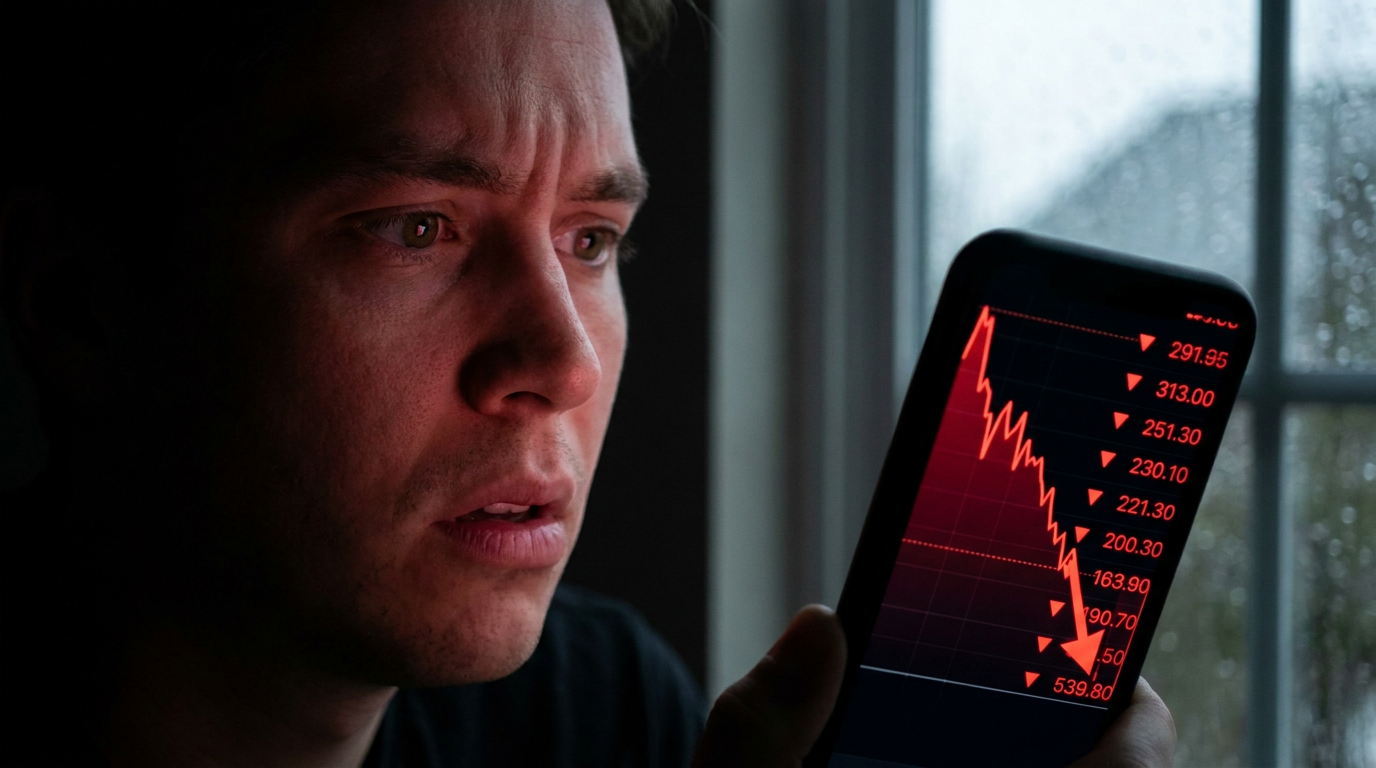
I’ve been following the market for a while now, and I’ve seen my fair share of ups and downs. But Wendy’s recent performance has been particularly puzzling. It’s not just a small dip; we’re talking about a significant slide that has many investors wondering if it’s time to cut bait or if there’s a hidden opportunity. I’ve been there, staring at a screen full of red numbers, feeling that familiar knot in my stomach. It’s a tough spot to be in, especially when you believe in a company’s potential.
The Current State: A Look at the Numbers
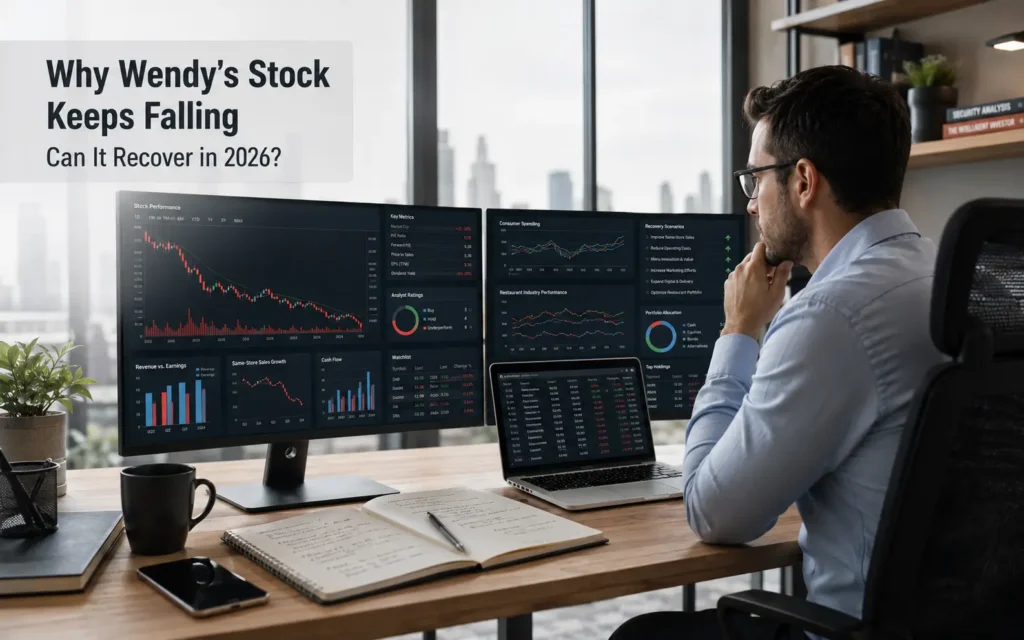
Let’s get straight to it. Wendy’s stock has been under considerable pressure. If you’ve been watching the charts, you’ve probably noticed the downward trend. For instance, in the past month alone, the stock has seen a decline of nearly 19%.³ That’s a pretty substantial drop for a well-established brand. This isn’t just a blip; it’s a pattern that has been unfolding over recent quarters.
Looking at their first quarter 2026 results, the picture isn’t exactly rosy. The company reported a decrease in global systemwide sales by 5.5%, with U.S. same-restaurant sales down a more significant 7.3%.¹ That’s a big deal because same-restaurant sales are a key indicator of a fast-food chain’s health. It tells you how well existing locations are performing, and a decline here suggests fewer customers are walking through the doors or spending less when they do.
Operating profit also took a hit, decreasing by 21.9%, and net income fell by a staggering 42.1%.¹ These aren’t just abstract numbers; they represent real challenges within the company’s operations. When profits shrink this much, it signals that the business is facing headwinds that are impacting its bottom line. It makes you wonder, what exactly are these headwinds? And can Wendy’s steer through them?
The Culprits: Macroeconomic Headwinds and Stiff Competition
So, why the slump? From what I’ve gathered, a few major factors are at play. First up, the macroeconomic challenges. We’re talking about things like inflation and cautious consumer spending. Everyone’s feeling the pinch these days, right? When prices go up for everything from groceries to gas, people tend to tighten their belts. And often, that means cutting back on discretionary spending, like eating out at fast-food restaurants.
Wendy’s, like many in the industry, is facing higher operating costs. The cost of beef, for example, has been a persistent issue. And let’s not forget about labour costs. Minimum wages are rising in many areas, and while that’s good for workers, it puts pressure on a company’s profit margins. Wendy’s has tried to offset these costs by strategically adjusting menu prices, but there’s a fine line between covering expenses and pricing yourself out of the market. Nobody wants to pay premium prices for a fast-food burger, no matter how square it is.
Then there’s the competition. The fast-food landscape is incredibly crowded. You’ve got the giants like McDonald’s and Burger King, but also a whole host of newer, trendier options and even grocery stores offering quick, affordable meal solutions. Everyone’s fighting for a piece of the same pie, and it’s a tough battle. Wendy’s needs to stand out, to offer something truly compelling that makes customers choose them over all the other options. When U.S. same-store sales are down, it suggests they’re losing ground in this competitive arena. ¹
My Own Brush with Reality: A Personal Failure
This whole situation with Wendy’s reminds me of a time I thought I had a brilliant business idea. I was convinced I could revolutionise the local coffee scene with a unique blend and a quirky atmosphere. I poured my heart, soul, and a good chunk of my savings into it. I had a vision, a passion, and what I thought was a solid plan. But I overlooked some crucial details. I didn’t fully account for the rising cost of premium coffee beans, the unexpected maintenance issues with the espresso machine, or the sheer volume of established coffee shops already in the area. I was so focused on my grand vision that I missed the practical realities of the market.

My coffee shop, much like Wendy’s stock lately, started strong but then slowly, painfully, began to decline. I tried to adjust, to cut costs, to introduce new items, but it felt like I was always a step behind. Eventually, I had to admit defeat and close the doors. It was a painful lesson, but it taught me the importance of not just having a good product but also understanding the broader economic environment and the competitive landscape and being adaptable. It’s not enough to have a great burger; you need to navigate the currents of the market.
What Needs to Happen for a Recovery?
So, what can Wendy’s do to turn the tide? It’s not an easy fix, but based on what I’ve seen and learned, there are several key areas where they need to focus. It’s about more than just tweaking the menu; it’s about a holistic approach to their business.
1. Reinvigorating the Customer Experience
In a crowded market, customer experience is king. Wendy’s needs to make every visit a positive one. This means faster service, accurate orders, and a pleasant atmosphere. Their Q1 2026 report mentioned a focus on operational excellence to improve order accuracy and customer satisfaction metrics.¹ That’s a good start, but it needs to translate into a noticeable difference for the average customer. Think about it: if you have a choice between two places, and one always gets your order right and serves it with a smile, which one are you going back to?
2. Innovation and Value Proposition
Wendy’s has always prided itself on its fresh, never-frozen beef. That’s a strong selling point. But they need to continue innovating and offering compelling value. The report highlighted new menu items like the Biggie platform, upgraded premium hamburgers, and new chicken sandwiches. These are steps in the right direction. However, in an inflationary environment, value becomes even more critical. How can they offer quality food at a price point that still feels like a good deal to the consumer? This might involve creative bundling, loyalty programmes, or even rethinking portion sizes to manage costs without sacrificing perceived value.
3. Strengthening the Breakfast Business
Breakfast is a huge battleground in fast food, and Wendy’s has been making strides here. Their breakfast sales grew over 6% year-over-year in 2024, outperforming the QSR burger category 3. This is a segment with significant growth potential, and they need to lean into it. Continued product innovation, strategic partnerships, and targeted promotions can help them capture a larger share of the morning crowd. The beauty of breakfast is that it often doesn’t require additional labour, which can improve restaurant economics.
4. Strategic Expansion and Optimization
While U.S. sales are struggling, Wendy’s international business is showing promise, with systemwide sales up 6.0%.¹ They recently announced a franchise agreement to build up to 1,000 restaurants across China over the next 10 years. ¹ This kind of strategic international expansion can be a powerful growth driver, diversifying their revenue streams and tapping into new markets. At the same time, they need to continue optimising their existing footprint, closing underperforming units and opening new ones in stronger trade areas. It’s about quality over quantity in some cases.
5. Navigating the Meme Stock Phenomenon
Interestingly, Wendy’s recently experienced a surge in its stock price due to retail investor enthusiasm, becoming a new ‘meme stock’. ²’ While this can provide a temporary boost, it’s often disconnected from the company’s fundamentals and can lead to extreme volatility. For long-term recovery, Wendy’s needs to focus on sustainable business practices rather than relying on speculative trading. The meme stock rally, while exciting for some, doesn’t address the underlying issues of declining sales and profitability. It’s a distraction, albeit a flashy one, from the real work that needs to be done.
The Road Ahead: A Long-Term Perspective
Recovering from a stock slump isn’t an overnight process. It requires consistent effort, strategic decision-making, and a deep understanding of the evolving consumer landscape. Wendy’s has a strong brand, a loyal customer base, and a history of innovation. These are valuable assets that can be leveraged for a turnaround. However, they need to execute their plans flawlessly.
From my perspective as a business owner, the biggest challenge for Wendy’s will be balancing cost management with customer value. In an inflationary environment, it’s tempting to cut corners or raise prices aggressively. But doing so risks alienating customers who are already feeling the pinch. The key is to find efficiencies without compromising the quality or experience that defines the Wendy’s brand. This might involve optimising supply chains, investing in technology to streamline operations, or finding creative ways to reduce waste.
Another critical aspect is communication. Wendy’s needs to clearly articulate its strategy to investors and consumers alike. Transparency about their challenges and their plans for addressing them can help rebuild trust and confidence. When I was struggling with my coffee shop, I learned that honesty, even about failures, can go a long way in maintaining credibility. It’s not about pretending everything is perfect; it’s about demonstrating a clear path forward.
The fast-food industry is constantly evolving. Consumer preferences shift, new competitors emerge, and economic conditions fluctuate. Wendy’s needs to be agile and responsive. This means continuously monitoring market trends, listening to customer feedback, and being willing to adapt their strategies as needed. The success of their international expansion, particularly the ambitious plan in China, will be a significant indicator of their ability to execute on a global scale.
Ultimately, the recovery of Wendy’s stock will depend on its ability to demonstrate sustained improvements in its core business. This means reversing the trend of declining U.S. same-restaurant sales, improving profitability, and expanding its global footprint strategically. It’s a tall order, but not an impossible one. Many companies have faced similar challenges and emerged stronger. It requires leadership, vision, and a relentless focus on the customer.
Conclusion: A Square Burger’s Future
So, will Wendy’s stock recover? My honest opinion is that it’s going to be a bumpy ride. The macroeconomic environment isn’t getting easier, and competition remains fierce. However, the company has identified key areas for improvement, and their focus on operational excellence, innovation, and international expansion are positive signs. The meme stock rally, while a curious anomaly, highlights the brand’s visibility and the potential for renewed interest if the fundamentals improve.
For investors, it’s a question of risk and reward. Is the current low stock price an opportunity to buy the dip, or is it a sign of deeper, more persistent problems? My personal experience taught me that sometimes, even with the best intentions, a business can struggle if it doesn’t adapt to its environment. Wendy’s has the potential to adapt, but it will require more than just new menu items; it will require a fundamental shift in how they operate and connect with their customers.
I’ll be watching Wendy’s closely, not just as an investor but as someone who appreciates a good square burger and believes in the power of a strong brand. Here’s hoping they can turn things around and reclaim their spot as a fast-food favourite.
References
Deep Dive: The Labor and Commodity Conundrum
When we talk about higher operating costs, it’s easy to just brush over it as “inflation”, but for a business like Wendy’s, it’s a constant, daily battle. Imagine running a kitchen where the price of your main ingredient—fresh beef—is as volatile as a tech stock. One week you’re doing okay; the next, your margins are being eaten alive by a sudden spike in commodity prices. ³ Wendy’s commitment to “fresh, never frozen” is a brilliant marketing move, but it also means their supply chain is more complex and sensitive than competitors who might use frozen patties. They can’t just stock up when prices are low; they’re buying constantly, which exposes them to every market fluctuation.
And then there’s the labour side of things. It’s not just about the hourly rate, although that’s a big part of it with wage inflation projected at around 4% for 2025.³ It’s about the difficulty of finding and retaining good people in a post-pandemic world. High turnover means more time and money spent on training, and it can lead to those “poor customer experiences” that the company itself identified as a risk factor. As a business owner, I know that your staff is the face of your company. If they’re stressed, under-trained, or constantly changing, the customer feels it. You can have the best burger in the world, but if it takes 20 minutes to get it and the person behind the counter is having a bad day, you’re probably not coming back.
The Competitive Battlefield: More Than Just Burgers
We also need to look at how the definition of “fast food” is changing. It’s not just about the drive-thru anymore. The rise of fast-casual chains like Shake Shack and Arcos Dorados has raised the bar for what consumers expect in terms of quality and atmosphere. ³ At the same time, convenience stores and even pharmacies are upping their grab-and-go food game. Wendy’s is caught in the middle—trying to maintain its premium “fresh” identity while competing on price with the value-driven giants.
I remember a conversation I had with a fellow entrepreneur who ran a small boutique clothing store. She told me, “I can’t compete with the big-box retailers on price, and I can’t compete with the luxury brands on prestige. I have to find my own lane.” Wendy’s is in a similar spot. They’re not the cheapest, and they’re not “fine dining”, even by fast-casual standards. Their “lane” has always been that middle ground of quality and value. But as the economy tightens, that middle ground is getting smaller and more crowded.
More Lessons from My Coffee Shop Disaster
To go back to my failed coffee shop for a moment—one of the things that really killed me was my lack of focus on the “unsexy” parts of the business. I was all about the latte art and the playlist, but I wasn’t paying enough attention to my inventory management or my utility bills. I thought that if I just made people happy, the money would follow. But in business, the money only follows if you’re also managing your costs with a ruthless eye.
Wendy’s seems to be realising this with their focus on “operational excellence” and “labour efficiencies”.¹ They’re looking at how to do more with less, using technology to streamline orders and manage staff more effectively. This is the kind of behind-the-scenes work that doesn’t make for a flashy commercial, but it’s what actually keeps a company profitable when times are tough. It’s the “unsexy” stuff that often makes the biggest difference in the long run.
A Closer Look at the China Expansion
The plan to build 1,000 restaurants in China is incredibly ambitious.¹ It’s a massive market, but it’s also one that has humbled many American brands. Tastes are different, the regulatory environment is complex, and local competition is fierce. If Wendy’s can pull it off, it could be a game-changer for their stock. But it’s a high-stakes bet. They’ll need to adapt their menu and their marketing to resonate with Chinese consumers while still maintaining the core of what makes Wendy’s, Wendy’s.
Think about the logistical challenge alone—sourcing fresh beef for 1,000 locations across a country as vast as China. That’s a Herculean task. If they succeed, it will be a testament to their operational prowess. If they struggle, it could become a significant drag on their resources. As an observer, I’m fascinated by this move. It’s a bold play for growth in a time when their domestic market is showing signs of fatigue.
The Final Word on the “Meme” Effect
We can’t ignore the social media factor. When a stock becomes a “meme”, it’s often because a community of retail investors sees it as an underdog or a “turnaround play” 2. There’s a certain romanticism to “saving” a beloved brand like Wendy’s. But as I’ve seen in my own business journey, sentiment only takes you so far. Eventually, the numbers have to back it up. A 25% surge in one day is exciting, but it doesn’t change the fact that same-store sales were down 1. For Wendy’s to truly recover, they need to turn that online enthusiasm into real-world foot traffic. They need the people tweeting about the stock to also be the people buying the Baconators.
In the end, business is about people. It’s about the people who make the food, the people who buy the food, and the people who invest their hard-earned money in the company. Wendy’s has the people’s attention; now they need to prove they can deliver the results. It’s a challenge I don’t envy, but it’s one that I’ll be watching with a lot of interest—and maybe a Frosty in hand.