I watched the whole thing happen in real time. And I have a lot of thoughts.
I want to start with a moment that happened on the morning of June 24.
I was eating breakfast. Scrolling through my phone. Half awake. And I saw a notification that Wendy’s stock was up 20% in premarket trading.
I put my coffee down.
Wendy’s. The burger chain. The one with the red-haired mascot and the Frosty. The one that had spent the better part of a year quietly bleeding out at a 20-year low. That Wendy’s.
Up 20% before the market even opened.
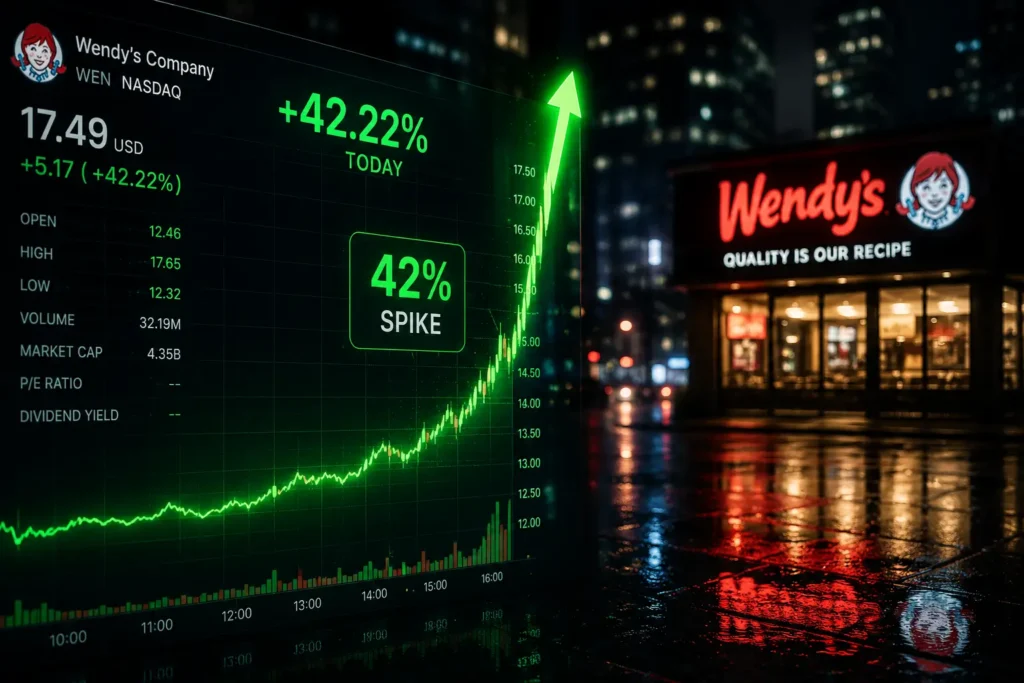
By the time trading actually started, it was up 30%. By midday it had touched 42% intraday. Trading was halted multiple times. Reddit was on fire. My phone would not stop buzzing with notifications.
I have been following individual stocks for about four years. I have watched meme trades before. GameStop in 2021. AMC. Bed Bath and Beyond. I know what this energy feels like.
But Wendy’s felt different. Because underneath the Reddit chaos and the short squeeze and the social media noise, there was an actual company. With actual problems. And some genuinely interesting things are starting to happen.
So let me break this all down for you. What happened? Why it happened. What Wendy’s actually looks like as a business right now. And whether any of this means anything for regular investors.
What Actually Happened on June 24
The day did not start with Reddit.
It started the night before, on June 23, when Wendy’s quietly announced the appointment of Steve Cirulis as its new chief financial officer and chief strategy officer.
That is an unusual combination for one person to hold: CFO and Chief Strategy Officer in the same role. It signals something. It says management wants the person controlling the money to also be the person making the big decisions about where the business goes.
But here is why the market cared so much about this particular hire.
Steve Cirulis and Wendy’s CEO Bob Wright have worked together before. At Potbelly. The sandwich chain. The two of them ran Potbelly together, and the results were significant. During their time at that company, Potbelly’s share price rose more than 500%. Average unit volumes saw double-digit growth. Restaurant margins expanded.
So the market looked at this and saw something specific. Not just a new CFO. But a reunion of two executives who had already done this before. At a smaller, struggling food chain. And produced real results.
That was the legitimate catalyst.
Then Reddit got involved.
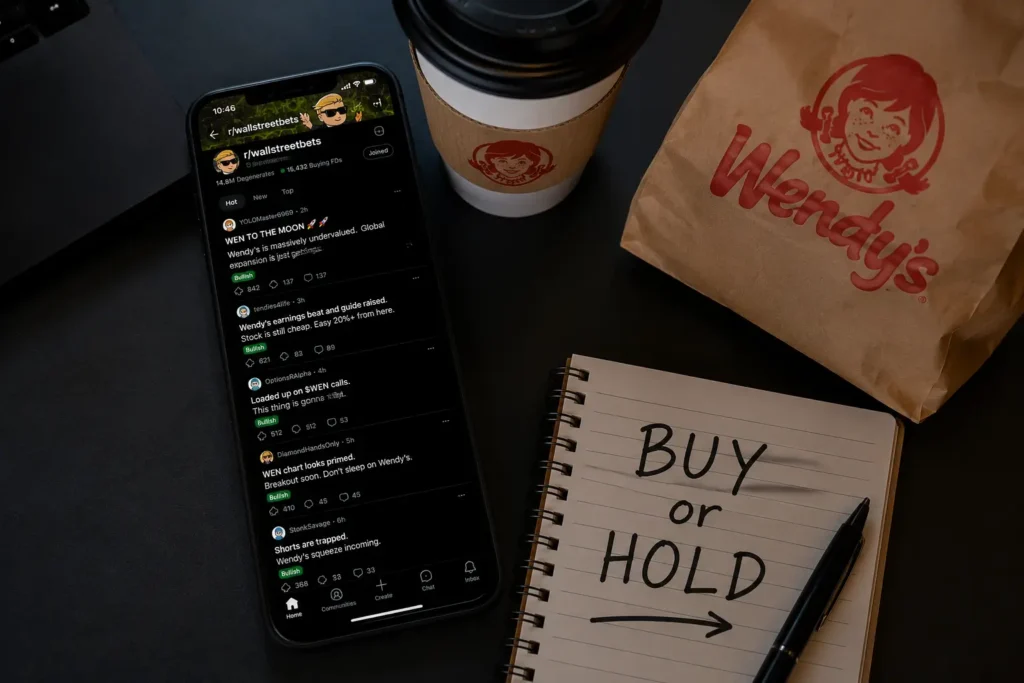
Overnight, posts started appearing on WallStreetBets. One thread was titled “We need to save Wendy’s before it’s too late.” Another walked through the investment case in detail. New management. A China expansion deal covering up to 1,000 restaurants over 10 years. Activist investor Nelson Peltz building a large stake through his firm Trian Fund Management and reportedly exploring taking the company private. High short interest. A stock sitting at a 20-year low.
That combination of real catalysts and Reddit energy was a match next to a pile of dry wood.
By the time the US market opened on June 24, the stock had already surged more than 20% in overnight trading. It kept going through the session. Wendy’s shares peaked at over 41% intraday on massive volume that triggered multiple trading halts.
Message volume around the WEN ticker on Stocktwits jumped more than 1,300% in a single day. Vanda Research flagged Wendy’s as the most extreme case of unusual retail buying activity they tracked that week.
For one morning, the most talked-about stock in America was a burger chain from Columbus, Ohio.
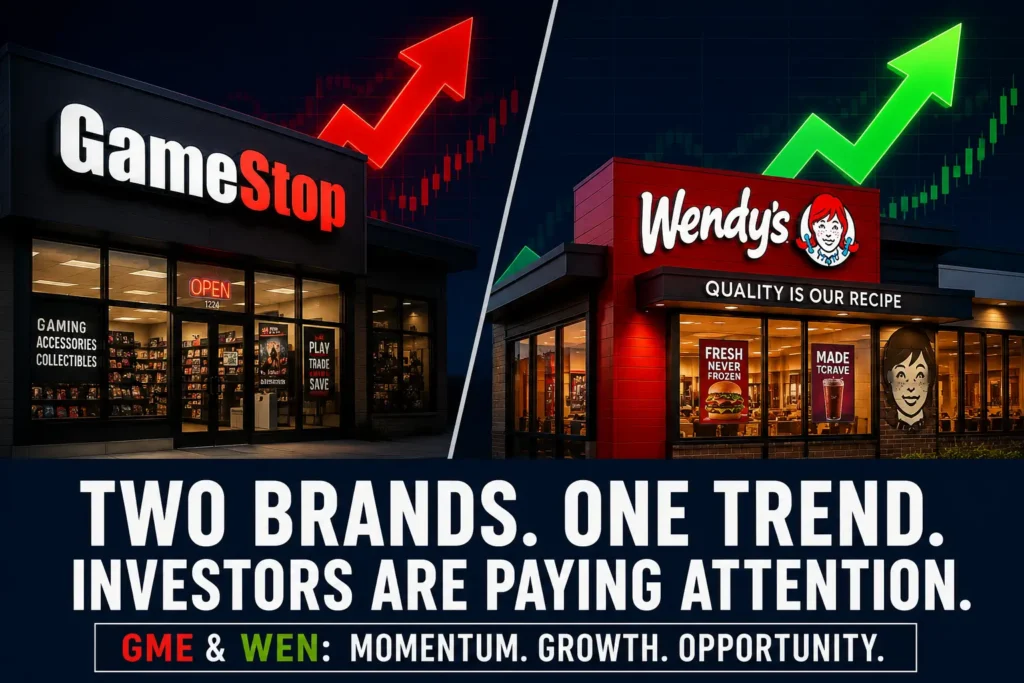
The GameStop Comparison: How Real Is It?
Every time a heavily shorted stock gets targeted by retail traders, people immediately start calling it the next GameStop.
Sometimes that comparison is lazy. Sometimes it is actually useful. In Wendy’s case, I think it is both.
Here is what is similar.
Wendy’s had very high short interest going into the rally. Short interest sat at around 26% of available shares according to some measures, with about 80% of available stock already out on loan. That is a crowded short position. When a heavily shorted stock starts moving up sharply, short sellers face pressure to buy back shares to close their positions. That buying adds fuel to the move. It becomes self-reinforcing for a while.
Wendy’s also has something GameStop had. Brand recognition. People know Wendy’s. They have feelings about it. The “save Wendy’s” framing tapped into something real. Nostalgia. Affection for a brand that has been part of American life for decades. That emotional element matters more than people want to admit in these situations.
Here is what is different.
GameStop’s short interest exceeded 100% of the float at its peak in 2021. Wendy’s 34% short interest is meaningful but nowhere near that extreme. The mechanical squeeze potential is real but more limited.
GameStop also had no legitimate turnaround story at the time. The Reddit trade there was almost entirely sentiment and positioning. With Wendy’s, there are actual business changes happening. New leadership with a real track record. A strategic plan called Project Fresh. An activist investor with a significant stake who is exploring a potential buyout.
These are real things. Not just vibes.
My opinion? The GameStop comparison gets people clicks and gets people excited. But it is not quite right. Wendy’s is something more complicated and more interesting than GameStop was.
What Wendy’s Actually Looks Like as a Business Right Now
Here is where I need to be completely honest with you. Because the stock moved 42% in a day, and that does not change what the actual business numbers look like.
The numbers are not good.
In Q1 2026, global same-store sales fell 5.5% and US same-store sales dropped 7.8%, worsening from a 2.8% decline a year earlier. Margins were squeezed by soft traffic and higher food costs. That is five straight quarters of US same-store sales declines. That is a trend, not a blip.
Wendy’s Q1 revenue came in at $423 million, well below the $518 million consensus estimate. Year-over-year revenue growth sits at negative 1.8%.
The balance sheet carries significant weight. Total debt stands at $4.8 billion against total equity of just $115.6 million. That is an extremely high leverage ratio for any company, let alone one with declining sales.
The dividend yield looks attractive on the surface. Right now it sits around 7.6%. But here is the thing about that dividend that worries me. The payout matches the full year 2026 earnings per share guidance, raising sustainability concerns amid high leverage and declining free cash flow. When a company is paying out nearly everything it earns as a dividend, that dividend is not as safe as the yield number makes it look.
So the picture is complicated. On one side, you have a recognisable brand, a cash-generating business with solid gross margins, new leadership with a proven track record at a similar company, an activist investor who may push for a sale or a private buyout, and a stock trading at a very cheap valuation.
On the other side, you have five quarters of same-store sales declines, a balance sheet carrying an enormous amount of debt, a turnaround plan that has not yet shown results at scale, and a stock that just moved 42% in a single day for reasons that had more to do with Reddit than earnings.
Those two things can both be true at the same time.
The Personal Failure I Have to Tell You About
I need to stop here and tell you about a decision I made two months ago.
In late April, I was looking at Wendy’s stock. It was trading around $7.20. I had done some reading on the company. I knew about the turnaround plan. I had read about Nelson Peltz and Trian building their stake. I thought the dividend yield at that price looked interesting.
I thought about buying a small position.
Then I looked at the debt numbers. The declining sales. The five consecutive quarters of US same-store sales weakness. I told myself this was a value trap. A company that looked cheap because it had real problems. I decided to pass.
Three weeks later the stock was at $6.07, a 20-year low.
I felt like I had made the right call.
Then June 24 happened. The stock went to almost $9 intraday. It settled around $7.80. I had gone from a position where I could have sold for a gain to watching a 42% single-day move happen without me.
The thing I got wrong was not the fundamental analysis. The debt is real. The declining sales are real. I was not wrong about any of that.
What I got wrong was not accounting for the other things happening around the stock. The activist stake. The short interest building to very high levels. The new CEO. The incoming CFO announcement. I was looking at the business and ignoring the positioning setup.
In stocks, sometimes the trade is not about what the company is worth. It is about what other people are about to do. And in this case, a lot of people were about to try to squeeze a lot of short sellers.
I missed it. That is the honest truth.
The Potbelly Playbook and Whether It Can Work at Wendy’s
This is the part of the Wendy’s story that I find most genuinely interesting.
Bob Wright and Steve Cirulis are not random executives. They have a specific playbook. And it worked at Potbelly.
At Potbelly, the approach combined better analytics, tighter cost control, disciplined strategy, and menu improvements focused on value. The result over several years was a more than 500% increase in Potbelly’s share price and double-digit growth in average unit volumes per restaurant.
Wendy’s Project Fresh is the current attempt to apply something similar. The plan focuses on US franchise unit economics. Better support for franchisees. Menu improvements including upgraded burgers and new chicken sandwiches. A value platform called Biggie that aims to reconnect with price-sensitive customers. International expansion, with a new China agreement covering up to 1,000 restaurants over 10 years. And store closures where locations are not performing.
That last piece matters. International systemwide sales grew 6% in Q1 2026, a bright spot in a quarter that also included 146 global net restaurant closures. Wendy’s is cutting weaker locations while trying to build stronger ones. That is painful in the short term but sometimes necessary for a real turnaround.
The challenge is scale. Potbelly was a much smaller company. It had around 400 locations. Wendy’s has roughly 7,000 restaurants across nearly 30 countries. What worked at 400 locations has to be proven at 7,000. That is a very different operational challenge.
My opinion? The Potbelly playbook is real, and the results there were genuinely impressive. Whether Wright and Cirulis can translate it to a company 17 times the size, with a much more complicated franchise system and a much heavier debt load, is the central question. Nobody knows the answer yet.
What Happened the Day After
The meme rally did not hold.
Wendy’s shares failed to extend their rally for a second day. The stock fell nearly 7% after surging by double digits earlier in the session.
That is what happens with short squeeze momentum. It burns fast. The forced buying that drives the initial spike exhausts itself. Traders who chased the top start selling. The stock gives back a chunk of the gains.
This is not surprising. This is how these things work. GameStop did the same thing. Multiple times. The difference between investors who made money in these situations and those who didn’t often came down to whether they had a position before the squeeze or were chasing it on the day of the spike.
Buying Wendy’s at $8.89, the intraday high on June 24, and watching it settle back to around $7.50 two days later is a very different experience from buying it at $6.26 the week before.
By June 26, WEN had settled around $7.80. Still well above the 20-year lows touched on June 23. But significantly off the peak.
Is WEN Actually Worth Buying Right Now?
This is the question. Let me give you the most honest answer I can.
The case for buying at current prices rests on a few things.
The valuation is genuinely cheap on traditional metrics. A price-to-earnings ratio around 9 and a price-to-sales ratio around 0.6 would look attractive for almost any profitable business. Wendy’s generates real cash. The gross margins are strong at around 63%. The business, stripped of its debt, is not broken.
The leadership change is meaningful. Wright and Cirulis have done this before. Having two people who already know how to work together, who have a specific playbook with a real track record, leading a turnaround is better than having unknowns.
The activist angle is real. Trian Fund Management is Wendy’s largest shareholder. Nelson Peltz has been exploring taking the company private. If a buyout happens, shareholders at current prices would likely do well.
The dividend at nearly 8% is significant income while you wait.
Now here is the honest other side.
Five straight quarters of US same-store sales declines do not reverse quickly. The debt load limits what management can do. Every dollar going to debt service is a dollar not going to marketing, store improvements, or technology.
If US sales continue declining or free cash flow comes under more pressure, a dividend cut becomes possible. And a dividend cut at a stock people are holding primarily for income would send the price sharply lower again.
The meme-rally energy is now gone. The Reddit crowd has moved on. Without that external buying pressure, the stock has to earn its price through fundamentals. And the fundamentals have not improved yet.
My honest opinion? Wendy’s at $7.80 is an interesting situation for patient investors who understand what they are holding. You are betting on a turnaround that has not yet worked at a company with significant debt, run by new leadership with a promising but unproven-at-this-scale playbook. The dividend is real income while you wait. The downside if the turnaround fails is meaningful.
This is not a slam dunk. It is a calculated bet on specific people, at a specific price, with real risks attached.
If you buy, go small. Do not put in money you cannot leave alone for two years while Wright and Cirulis work through the hard parts of Project Fresh.
And do not chase it on a day when Reddit is telling you to buy.
What This Whole Situation Tells Us About How Markets Work Now
The Wendy’s trade is a useful reminder of something important.
Stock prices are not always about what a company is worth today. They are about what people expect and what other people are going to do.
Wendy’s business on June 23 was identical to Wendy’s business on June 24. The same declining same-store sales. The same heavy debt. The same new CEO trying to run a turnaround.
What changed was the positioning and the narrative.
Short sellers had piled in. Short interest was at record levels. A viral Reddit post gave retail traders a rallying cry. An executive announcement gave the story a credible hook. All of those things together created a setup where the stock could move 42% in a single day without the underlying business changing at all.
That is the market working exactly as it does. Not as it should, necessarily. As it does.
Understanding that gap between price and value, between what is happening in a stock and what is happening in a business, is one of the most important things any investor can learn.
Wendy’s gave a lot of people a masterclass in that gap this week.
Some people got paid for understanding it. Some people got burnt for not doing so.
Are you holding Wendy’s right now or thinking about it? Tell me in the comments what your thesis is. These conversations are always more useful than anything I can write alone.
This post reflects my personal experience and opinions and is not financial or investment advice. I may have views on the securities mentioned. Always do your own research and consult a qualified financial professional before making investment decisions.