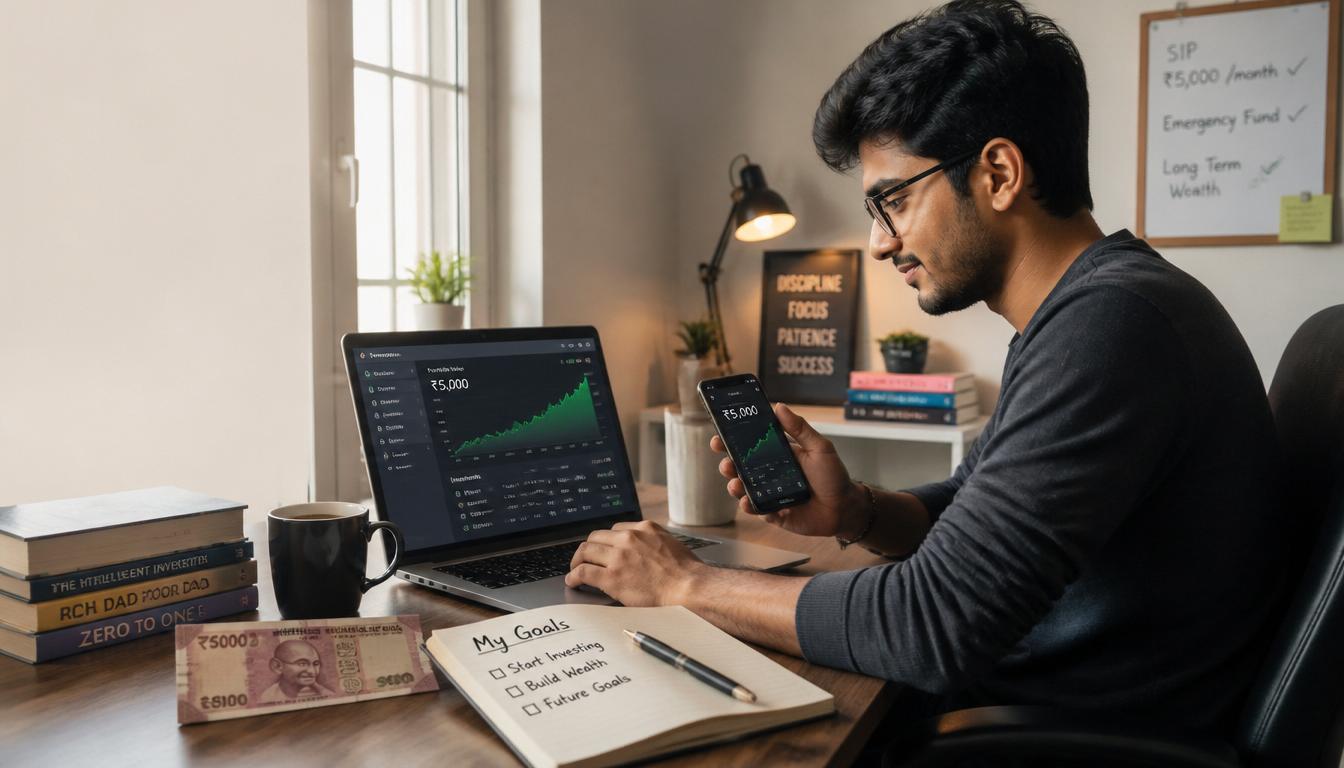
Two years ago, I was just another college student scrolling through Instagram, watching friends post about their expensive gadgets & fancy dinners. Meanwhile, I had exactly ₹5000 sitting in my savings account money I’d saved from birthday gifts & small freelancing gigs.That’s when I stumbled upon a YouTube video titled “How to Build WEALTH with Small Money.” Little did I know, this random click would change my entire financial future forever.
Back then, investing felt like something only rich uncles & business tycoons did. The stock market seemed like a mysterious world filled with complicated charts & scary numbers that could make you lose everything overnight. But as I dove deeper into research, I realized that successful investing isn’t about having lakhs of rupees it’s about starting SMART, learning continuously, & being patient with your money growth journey.
This article shares my complete beginner story, from making embarrassing rookie mistakes to finally understanding how money can work FOR you instead of just sitting idle in a bank account. I’ll walk you through every step I took, the lessons I learned the hard way, & practical tips that can help anyone start their investment journey with whatever small amount they have. Whether you’re a student like I was or someone who thinks ₹5000 is too little to begin investing, this story will show you that every financial giant started with their first small step.
The SCARY Beginning: Overcoming My Investment Fears
My investment journey didn’t start with confidence – it began with pure terror & countless sleepless nights spent reading articles about people losing their life savings. Every investing forum seemed filled with horror stories about market crashes & bad decisions that ruined families financially. I remember staring at my ₹5000 for weeks, wondering if I should just keep it safely tucked away in my savings account earning a measly 3% interest per year.
The biggest fear was simple: what if I lose EVERYTHING? As a college student, ₹5000 represented months of careful saving & sacrificing small pleasures like movie tickets & restaurant meals. The thought of watching that money disappear because of one wrong click felt absolutely terrifying. My parents had always taught me to save money, not to “gamble” it in markets they didn’t understand themselves.

However, I slowly realized that NOT investing was actually the bigger risk. Inflation was eating away at my money’s purchasing power every single day. The ₹5000 I had today would only buy goods worth ₹4700 next year if I just kept it in a regular savings account. This realization hit me like a lightning bolt – I was already LOSING money by doing nothing!
To overcome my fears, I started with baby steps. First, I spent two weeks reading basic investment books & watching beginner-friendly YouTube channels. Then I opened a demat account with a discount broker that charged minimal fees for small transactions. Most importantly, I mentally prepared myself to treat this ₹5000 as “learning money” – funds I could afford to lose while gaining invaluable financial education that would serve me for life.
Choosing My FIRST Investment Strategy
After weeks of research, I decided to split my ₹5000 into three different baskets to minimize risk while maximizing learning opportunities. This wasn’t some fancy strategy I copied from expensive courses – it was pure common sense mixed with beginner-friendly approaches I’d discovered through free online resources.
My first basket got ₹2000, which I invested in a well-established mutual fund focusing on large-cap stocks. Large-cap companies are basically the big, stable companies everyone knows – like TCS, Reliance, & HDFC Bank. These companies don’t usually give explosive returns, but they’re much less likely to suddenly crash & burn. I chose a mutual fund because professional fund managers would handle the complex decisions while I learned the basics of market movements.
The second basket received ₹2000 for direct stock investments in companies I actually UNDERSTOOD. I bought shares in Asian Paints because I could see their products everywhere, Hindustan Unilever because I used their products daily, & ITC because despite health concerns, their business model seemed solid. This taught me the valuable lesson of investing in businesses I could comprehend rather than chasing random stock tips from social media.
My final ₹1000 went into what I called my “learning & emergency fund.” Half of this amount stayed in a liquid fund for any urgent needs, while the other half was my “experiment money” for trying different investment approaches. Sometimes I’d buy a small amount of a trending stock just to understand how individual stock movements worked, & other times I’d invest in sector-specific ETFs to learn about different industries.
This three-basket approach wasn’t perfect, but it gave me diversification across different risk levels while ensuring I had hands-on experience with various investment types. More importantly, it prevented me from putting all my eggs in one basket & potentially losing everything due to beginner mistakes.
Learning from MISTAKES & Market Ups and Downs
My first three months of investing were like riding an emotional roller coaster blindfolded. One day I’d wake up to see my portfolio up by ₹200 & feel like a financial genius planning my early retirement. The next day, everything would be red with losses of ₹300, & I’d panic about whether I should sell immediately to stop further damage.
My biggest mistake came in month two when I saw a stock tip on a Telegram channel claiming a particular small-cap stock would “definitely” double in a week. Ignoring all my research & strategy, I impulsively sold one of my stable holdings & put ₹1500 into this “guaranteed” opportunity. Within three days, the stock had fallen by 25%, & I learned the expensive lesson that there are NO guarantees in investing & that following random tips is basically gambling.

However, this mistake taught me something invaluable, the importance of PATIENCE & sticking to researched decisions rather than chasing quick profits. I decided to hold my losing position & use it as a daily reminder to make smarter choices. Surprisingly, after six months, that same stock recovered & even gave me a small profit, but the stress it caused wasn’t worth the eventual gain.
The market volatility during my early months was actually a blessing in disguise. I experienced mini-crashes & sudden rallies that taught me how normal these fluctuations really are. When the overall market fell by 8% in one week due to global tensions, my portfolio dropped to ₹4200 from ₹5400. Instead of panicking, I used this as an opportunity to invest my remaining ₹500 emergency fund when prices were lower.
These experiences taught me that successful investing isn’t about avoiding losses – it’s about managing them intelligently & learning from every mistake. Each wrong decision became a stepping stone toward better understanding market psychology & my own emotional responses to money fluctuations.
Growing My Portfolio: SMART Moves That Paid Off
After six months of learning through trial & error, I started making more informed decisions that actually moved my portfolio in the right direction. My ₹5000 had grown to around ₹6200, which might seem small, but represented a 24% return – much better than any bank fixed deposit could offer!
The turning point came when I started treating investing like a business rather than a hobby. I created a simple spreadsheet tracking each investment’s performance, the reasons I bought it, & lessons learned from each decision. This helped me identify patterns in my successful picks versus my poor choices. I noticed that companies with consistent profit growth & strong market positions in their industries performed much better than flashy startups or trend-based picks.
I also began the habit of monthly SIP (Systematic Investment Plan) contributions. Every month, I’d add whatever extra money I could find – sometimes ₹500, sometimes ₹1500 – depending on my freelancing income or saved pocket money. This regular investing habit taught me the power of rupee cost averaging, where you buy more units when prices are low & fewer units when prices are high, automatically optimizing your average purchase cost.
One of my SMARTEST moves was reinvesting all dividends & profits back into my portfolio instead of spending them. When my mutual fund gave me ₹150 in dividends, that money immediately went toward buying more units. When I sold a stock for a ₹400 profit, those gains funded my next investment opportunity. This compounding effect meant my money started making money, which then made even more money!
I also started following annual reports & quarterly results of companies I’d invested in. While initially boring & confusing, these documents gradually began making sense & helped me understand whether my chosen companies were actually growing their businesses or just riding market sentiment waves.
My Current Status & FUTURE Investment Plans
Today, eighteen months after starting with ₹5000, my portfolio is worth approximately ₹18,500. This includes additional investments I’ve made from income over time, but my original ₹5000 has grown to around ₹12,000 purely through market gains & compound growth. More importantly than the money, I’ve gained confidence & knowledge that will serve me throughout my financial life.
My portfolio has evolved significantly from those early random picks. Now I focus primarily on quality mutual funds for steady growth, with about 70% of my money in diversified equity funds & balanced advantage funds. The remaining 30% is split between individual stocks of companies I genuinely understand & believe in for long-term growth, plus a small emergency buffer in liquid funds.

Looking ahead, my investment goals have become much clearer & more ambitious. I’m working toward building an emergency fund worth six months of expenses while simultaneously growing my investment corpus to ₹1 lakh by the end of next year. This target seems achievable through continued monthly SIPs & adding any bonus income from internships or freelance projects.
I’ve also started exploring new investment avenues like REITs (Real Estate Investment Trusts) & international diversification through feeder funds. However, I’m approaching these CAREFULLY with small amounts initially, applying the same research-first approach that helped me survive my beginner phase.
My future plans include eventually moving toward financial independence where my investments generate enough passive income to cover basic living expenses. While this goal might take 10-15 years to achieve, starting early with whatever small amount I had has given me a significant head start toward building long-term wealth.
Key LESSONS Every Beginner Should Remember
Starting my investment journey with just ₹5000 taught me invaluable lessons that no expensive course could have provided. The most important realization is that you don’t need to be rich to start building wealth – you just need to be SMART, patient, & willing to learn from both successes & failures along the way.
First & foremost, start with whatever amount you have RIGHT NOW, even if it feels impossibly small. Every successful investor began with their first investment, whether it was ₹500 or ₹5 lakhs. The key is beginning the learning process & developing good financial habits that will serve you when you have larger amounts to invest. Time in the market beats timing the market every single time.
Never invest money you cannot afford to lose, especially as a beginner. Your first investments should be treated as tuition fees for the most valuable financial education you’ll ever receive. This mindset helps you make rational decisions without emotional panic when markets inevitably fluctuate or when you make occasional poor choices.
Research every investment thoroughly before committing your money, but don’t get stuck in analysis paralysis forever. Understand the company’s business model, check their financial health, & ensure you comprehend what you’re buying. However, remember that no amount of research guarantees profits – the goal is making informed decisions with acceptable risk levels.
Finally, develop patience as your greatest investing superpower. The stock market rewards those who think long-term & punish those chasing quick profits. Some of my best-performing investments took months to show positive returns, while my worst mistakes came from impatient decisions based on short-term market movements or social media tips.
Starting your investment journey with ₹5000 or any small amount isn’t just about growing money – it’s about growing financial intelligence & building habits that will compound into life-changing wealth over time. Take that first step today, because the best time to plant a tree was twenty years ago, but the second-best time is RIGHT NOW!