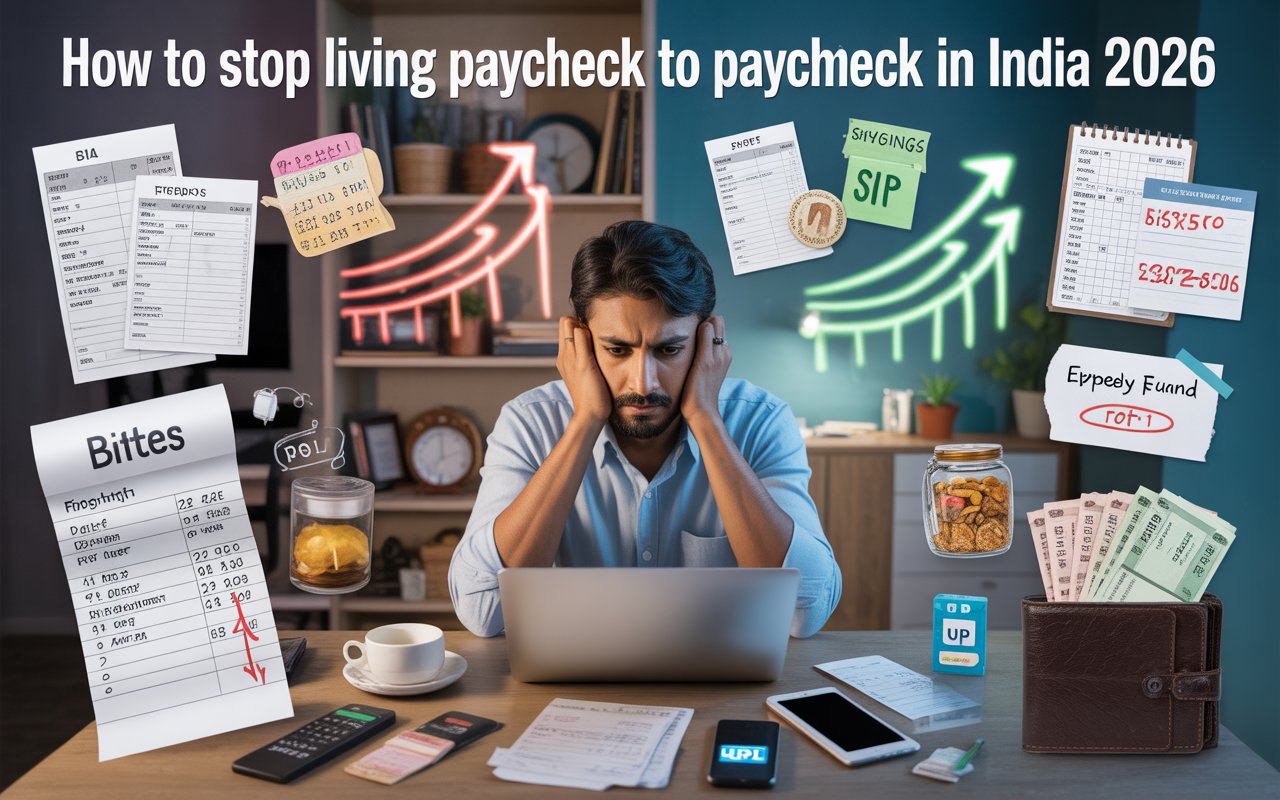
Picture this: it’s the 25th of the month, & your bank account shows ₹347 remaining until your next salary hits. Sound familiar? You’re not alone in this struggle. Millions of Indians today find themselves trapped in the exhausting cycle of living paycheck to paycheck, where each month feels like a financial marathon that never ends.
The reality is stark yet eye-opening. According to recent surveys, nearly 78% of working Indians live paycheck to paycheck, regardless of their income levels. This means even software engineers earning ₹8 lakhs annually & doctors making ₹12 lakhs often find themselves financially stressed by month-end. The problem isn’t always about earning less money – it’s about managing what we HAVE more effectively.
Living paycheck to paycheck creates a dangerous cycle that affects every aspect of your life. Your mental health suffers, your relationships strain under financial pressure, & your dreams of buying a house, starting a business, or planning that European vacation seem impossible. But here’s the GOOD news breaking free from this cycle is absolutely possible with the right strategies & mindset.
This comprehensive guide will walk you through proven methods to escape the paycheck-to-paycheck lifestyle in 2026. We’ll explore practical budgeting techniques that actually work for Indian households, smart ways to increase your income using today’s digital opportunities, & simple investment strategies that can grow your wealth over time. Whether you’re a fresh graduate starting your career or a seasoned professional looking to regain financial control, this article contains actionable steps you can implement immediately.
Understanding Your Current Financial Reality
Before you can solve any problem, you need to understand its ROOT causes. Many people living paycheck to paycheck have never actually calculated where their money goes each month. This lack of awareness keeps them trapped in the cycle indefinitely.
Start by tracking every single expense for one month yes, even that ₹10 chai at the office canteen. Use apps like Money View, Walnut, or simply maintain a notebook. You’ll be SHOCKED to discover how small expenses add up to significant amounts. For instance, spending ₹200 daily on food delivery might seem reasonable, but it totals ₹6,000 monthly – enough to start an emergency fund!
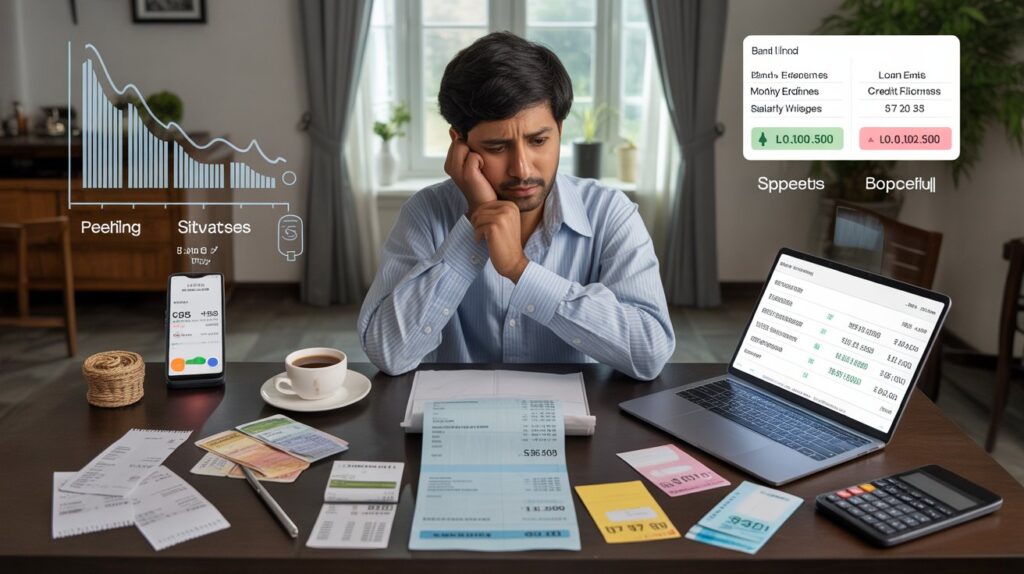
The next step involves categorizing your expenses into three buckets: NEEDS, wants, & savings. Needs include rent, groceries, utilities, & loan EMIs. Wants cover dining out, entertainment, shopping for non-essential items, & subscriptions. Savings should ideally be 20% of your income, though starting with even 10% is better than nothing.
Most people discover that their “wants” category consumes 40-50% of their income, leaving nothing for savings. This imbalance creates the paycheck to paycheck cycle. The key is gradually reducing wants while maintaining your quality of life. Remember, this isn’t about becoming a miser – it’s about making CONSCIOUS choices with your money.
Creating a Bulletproof Budget That Actually Works
Traditional budgeting advice often fails because it’s too restrictive or doesn’t account for Indian lifestyle patterns. Let’s create a budget that fits your REAL life, not some idealistic version of it.
The 50-30-20 rule works well for Indian households with some modifications. Allocate 50% for needs, 30% for wants, & 20% for savings & investments. However, in expensive cities like Mumbai or Bangalore, you might need to adjust this to 60-25-15 initially, then work toward the ideal ratio over time.
Use the envelope method for variable expenses like groceries, entertainment, & shopping. At the beginning of each month, allocate specific amounts for these categories & stick to them. When the money’s gone, it’s GONE. This creates natural boundaries & prevents overspending.
Technology can be your best friend here. Set up automatic transfers to your savings account on salary day, before you have a chance to spend the money. Treat your savings like a non-negotiable EMI to yourself. Many banks offer sweep-in facilities that automatically transfer excess funds to higher-interest accounts.
Don’t forget to include a “fun fund” in your budget. Completely restricting entertainment & social activities often leads to budget rebellion, where you end up spending MORE than planned. Instead, allocate a reasonable amount for guilt-free spending each month.
Smart Strategies to Boost Your Income
In 2026, the opportunities to increase your income are ENDLESS, thanks to the digital revolution & India’s growing gig economy. You don’t need to quit your day job to earn extra money – you just need to be creative & consistent.
Freelancing platforms like Upwork, Fiverr, & Freelancer.com offer opportunities in writing, graphic design, programming, digital marketing, & virtual assistance. Even if you can earn an additional ₹10,000 monthly through freelancing, that’s ₹1.2 lakhs annually – enough to build a solid emergency fund or start investing.
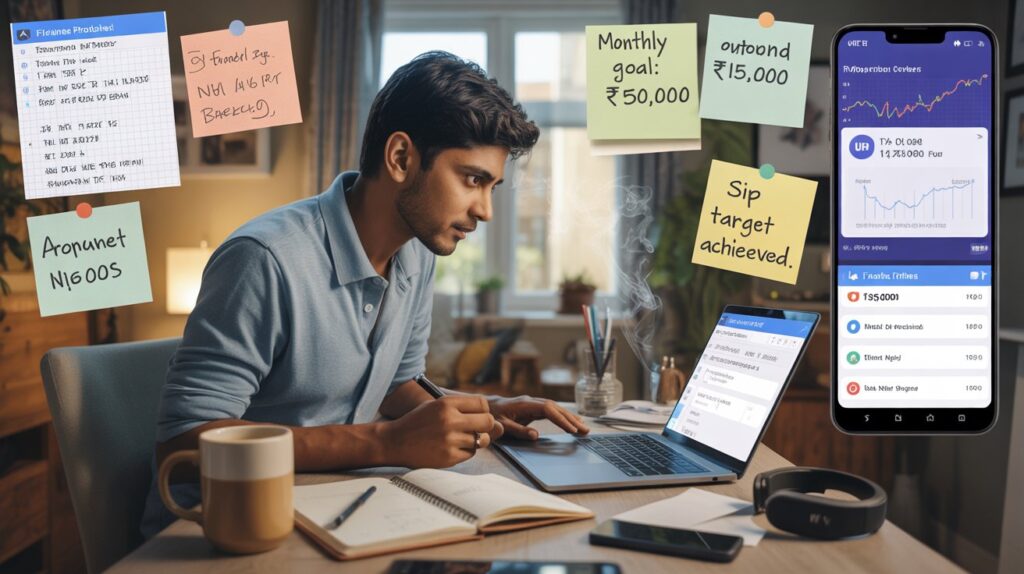
Consider monetizing your existing skills & hobbies. Are you good at cooking? Start a home-based catering service or teach cooking classes. Do you play a musical instrument? Offer online lessons. Are you fluent in multiple languages? Provide translation services. The key is to start small & scale gradually.
The gig economy offers flexible income opportunities through food delivery, ride-sharing, & task-based services. While these shouldn’t replace your primary income, they can provide valuable supplemental earnings during weekends or evenings. Many professionals earn ₹15,000-25,000 monthly through part-time gig work.
Don’t overlook passive income opportunities. Create online courses, write eBooks, start a YouTube channel, or develop mobile apps. These require upfront effort but can generate income for months or years afterward. The key is choosing something aligned with your expertise & interests.
Building Your Financial Safety Net
An emergency fund is your FIRST line of defense against financial emergencies & the foundation of breaking free from paycheck-to-paycheck living. Without this safety net, any unexpected expense sends you straight to credit cards or personal loans, creating a debt spiral.
Start with a goal of ₹1,000, then ₹5,000, then one month’s expenses, & eventually 3-6 months of living expenses. This might seem overwhelming, but remember – you’re not building this overnight. Even saving ₹1,000 monthly means you’ll have ₹12,000 by year-end, providing significant peace of mind.
Keep your emergency fund in easily accessible accounts like savings accounts or liquid funds. Don’t worry about earning high returns on this money – its PURPOSE is security, not growth. Many banks offer special savings accounts with higher interest rates for maintaining minimum balances.
Automate your emergency fund contributions to remove the temptation to spend this money elsewhere. Set up an automatic transfer of ₹2,000-5,000 (or whatever amount you can afford) to a separate account every month. Treat this like a monthly bill that must be paid.
Consider multiple emergency funds for different purposes. A medical emergency fund, home repair fund, & job loss fund can provide comprehensive coverage. This approach makes the goal less daunting & ensures you’re prepared for various scenarios.
Simple Investment Strategies for Wealth Building
Once you’ve established an emergency fund, it’s time to make your money WORK for you through investments. The goal isn’t to become a stock market expert overnight – it’s to start building wealth consistently & safely.
Systematic Investment Plans (SIPs) in mutual funds are perfect for beginners. Start with diversified equity funds if you’re young & can handle some risk, or balanced funds if you prefer stability. Even ₹1,000 monthly SIP can grow to significant amounts over 10-15 years thanks to compound interest.
Don’t put all your eggs in one basket. Spread your investments across different asset classes: equity mutual funds for growth, debt funds for stability, & PPF or ELSS for tax benefits. This diversification protects you from market volatility while ensuring steady returns.

Take advantage of employer benefits like EPF contributions & matching. If your company offers additional benefits like stock options or group insurance, understand & utilize them fully. These often provide better returns than individual investments.
Consider starting a Recurring Deposit (RD) or investing in government schemes like NSC or tax-saving fixed deposits. While returns might be lower than equity investments, they provide guaranteed returns & help build disciplined saving habits.
Conclusion: Your Journey to Financial Freedom Starts Today
Breaking free from the paycheck-to-paycheck cycle isn’t about making DRAMATIC changes overnight – it’s about implementing small, consistent improvements that compound over time. Remember, even a journey of a thousand miles begins with a single step, & your financial journey starts with the decision to take control of your money.
The strategies outlined in this guide aren’t theoretical concepts – they’re practical tools that thousands of Indians have used successfully to transform their financial lives. Start with tracking your expenses for one week, then create a simple budget, then build a ₹1,000 emergency fund. Each small victory builds momentum for the next step.

Your income level doesn’t determine your financial success – your money management skills do. Whether you earn ₹25,000 or ₹2.5 lakhs monthly, these principles will help you build wealth & achieve financial peace of mind. The key is starting TODAY, not waiting for the perfect moment or a salary increase.
Take action on at least ONE strategy from this article this week. Download an expense tracking app, open a separate savings account for your emergency fund, or research mutual fund options for your first SIP. Small actions create BIG results when done consistently.
Remember, financial freedom isn’t just about having more money – it’s about having choices. The choice to take a career break, pursue your passion, help family members, or simply sleep peacefully without worrying about next month’s expenses. Your future self will thank you for the steps you take today toward breaking FREE from the paycheck-to-paycheck trap.