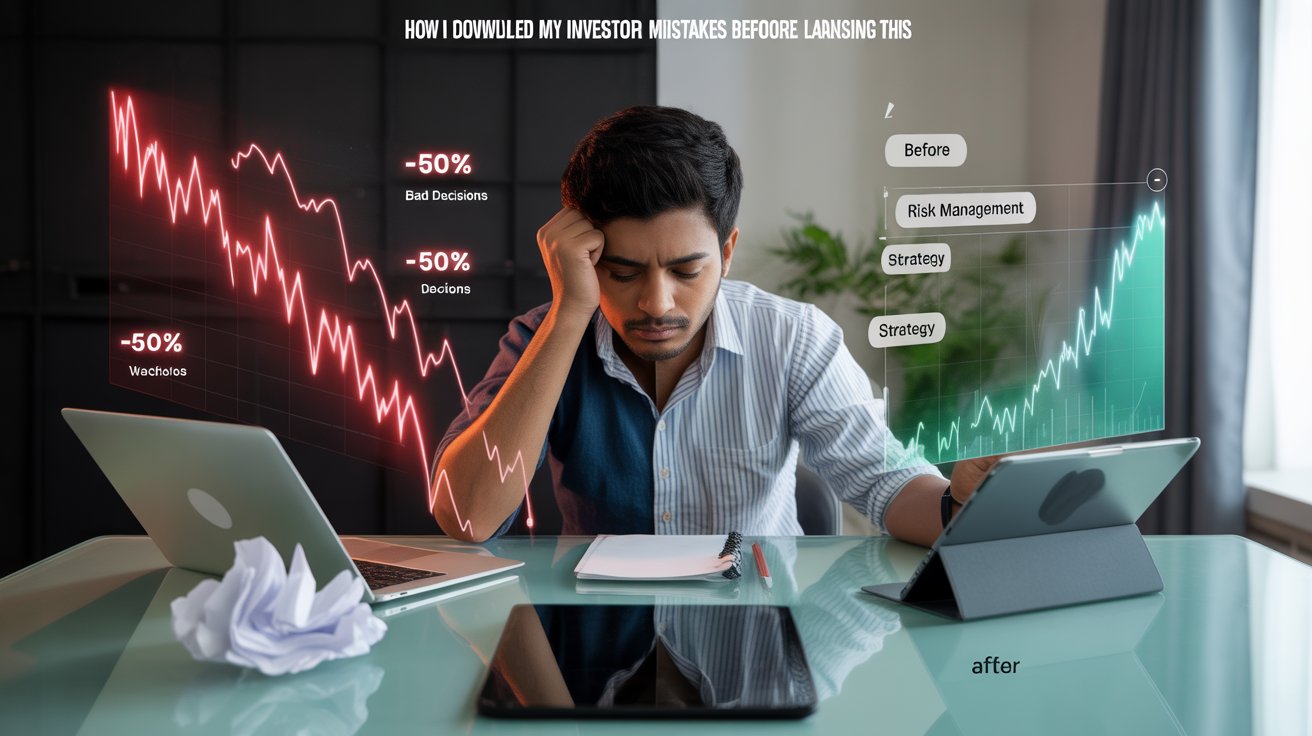
Picture this: You’re sitting at your computer, watching your investment account balance drop by $50,000 in just three months. Your hands are shaking, your heart is racing, & you’re wondering how everything went so WRONG. That was me in 2019, staring at my screen in complete disbelief. I thought I was smart with money. I had read books, watched YouTube videos, & even followed some popular investment gurus on social media. But somehow, I managed to double down on every single mistake possible before learning the one crucial lesson that would change my entire approach to investing.
What I’m about to share with you isn’t just another feel-good story about getting rich quick. This is the raw, unfiltered truth about how I turned my biggest failures into my greatest learning experiences. Throughout this article, we’ll dive deep into the specific mistakes that cost me thousands of dollars, the emotional rollercoaster that nearly made me quit investing forever, & most importantly, the simple but powerful principle that transformed my financial future. Whether you’re a complete beginner or someone who’s made similar mistakes, this story will give you the tools to avoid the same painful pitfalls I experienced.
The First Domino: When Confidence Became My Worst Enemy
My journey into the world of investing started like many others – with way too much confidence & way too little knowledge. I had just received a bonus at work, about $25,000, & instead of being smart about it, I decided I was going to become the next Warren Buffett overnight. The problem wasn’t that I wanted to invest; the problem was that I thought I already knew everything I needed to know. I spent maybe two weeks reading articles online & watching a few videos, then jumped in headfirst without any real strategy or understanding of risk management.
The first mistake I made was putting ALL of my money into just three stocks. I had heard about diversification, but I convinced myself that I was being smart by picking companies from different industries. I bought shares in a tech startup that was getting lots of buzz, a pharmaceutical company that was supposedly developing a breakthrough drug, & a cryptocurrency that my friend’s brother recommended. Looking back, I realize I was basically gambling, not investing. Each of these choices was based on emotions, hype, & second-hand information rather than actual research or understanding.
Within the first month, things seemed to be going great. Two of my three investments were up, & I was feeling like a genius. This early success was actually the worst thing that could have happened to me because it made me even more overconfident. I started telling friends & family about my “investment strategy,” & I even began thinking about quitting my day job to become a full-time trader. The temporary gains had completely clouded my judgment & made me forget that the stock market can be incredibly unpredictable.
The Avalanche Begins: How Small Mistakes Became Big Disasters
Just when I thought I had everything figured out, the market started to turn against me. The tech startup I had invested in announced some disappointing quarterly results, & the stock dropped by 30% in a single day. Instead of cutting my losses or at least reassessing my strategy, I did something even worse – I doubled down. I convinced myself that this was just a temporary setback & that the stock would bounce back stronger than ever. So I took money from my emergency fund & bought even more shares at what I thought was a “discount.”

This decision to double down was the beginning of my financial avalanche. The pharmaceutical company I had invested in faced some regulatory issues, & their stock price plummeted by 50% over the next two weeks. The cryptocurrency I had bought also started losing value as the market became more volatile. Instead of learning from these losses, I kept making the same mistake over & over again. Every time one of my investments dropped, I would buy more shares, thinking I was being smart by “averaging down.” What I didn’t realize was that I was just throwing good money after bad.
The emotional toll of watching my investments lose value was enormous. I found myself checking my portfolio every few minutes throughout the day, unable to focus on work or anything else. My sleep suffered, my relationships became strained, & I started developing anxiety about money that I had never experienced before. The worst part was that I kept these struggles to myself, too embarrassed to admit that my “brilliant” investment strategy was falling apart. I was trapped in a cycle of bad decisions, & each mistake seemed to lead to an even bigger mistake.
The Breaking Point: When Everything Fell Apart
By month three, my portfolio had lost about 70% of its value. The $25,000 bonus I had started with was now worth less than $8,000, & I had also lost another $25,000 from my emergency fund that I had used to “average down” on my losing positions. I was facing a total loss of over $40,000, which was more money than I had ever lost on anything in my entire life. The tech startup I had invested in was on the verge of bankruptcy, the pharmaceutical company’s drug had failed clinical trials, & the cryptocurrency had lost most of its value due to regulatory concerns.
The moment I realized how bad things had gotten was both terrifying & oddly liberating. I remember sitting in my car after work, too ashamed to go home & face my partner, when I finally decided to call my uncle who had been successfully investing for over 20 years. I had avoided talking to him earlier because I wanted to prove that I could figure everything out on my own, but I was finally ready to admit that I needed help. That phone call was the turning point that would eventually save my financial future.
During our conversation, my uncle didn’t lecture me or make me feel worse about my mistakes. Instead, he shared his own stories of investment failures from when he was younger, & he helped me understand that losing money is often part of the learning process. But then he said something that completely changed my perspective: “The most successful investors aren’t the ones who never make mistakes; they’re the ones who learn to cut their losses quickly & let their winners run.” This simple concept would become the foundation of everything I learned about investing from that point forward.
The Life-Changing Lesson: The Power of Risk Management
The “ONE RULE” that my uncle taught me wasn’t about picking the right stocks or timing the market perfectly. It was about something much more fundamental: risk management. He explained that successful investing isn’t about being right all the time; it’s about making sure that when you’re wrong, you don’t lose so much money that you can’t recover. This concept was completely opposite to everything I had been doing. Instead of trying to predict which investments would be winners, I needed to focus on protecting myself from big losses.
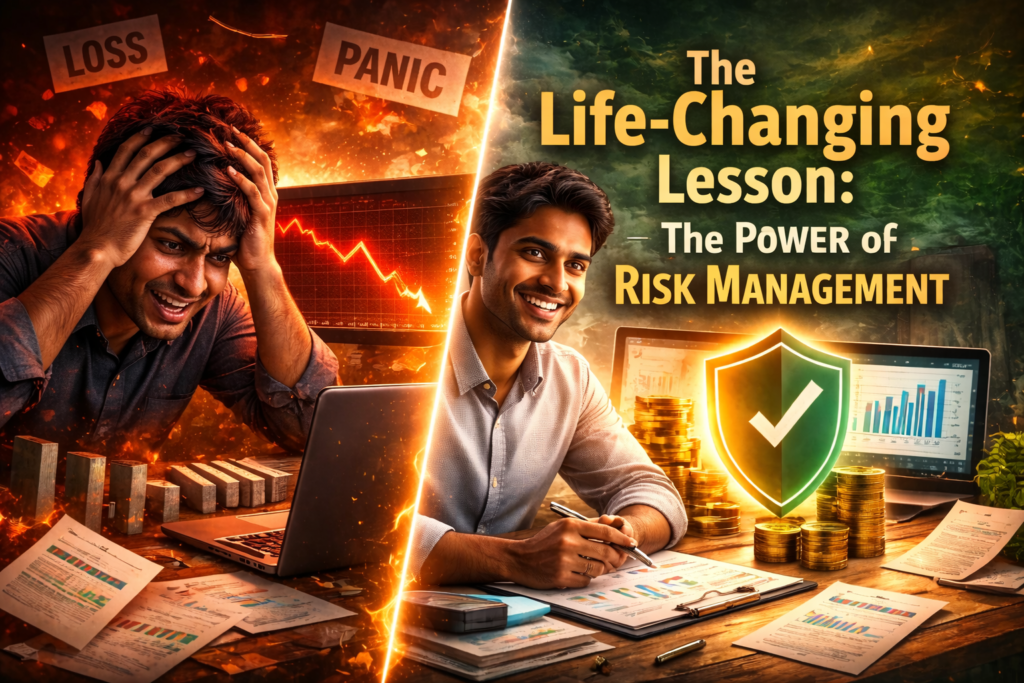
The specific strategy he taught me was called the “2% rule.” This means never risking more than 2% of your total investment portfolio on any single trade or investment. If my portfolio was worth $50,000, I should never risk more than $1,000 on any one stock. If that stock went down by 10%, I would only lose $100, which wouldn’t devastate my entire portfolio. This approach would have saved me from the massive losses I had experienced because I would have been forced to diversify my investments much more widely.
He also taught me about setting stop-losses, which are automatic orders to sell a stock if it drops below a certain price. This removes the emotion from the decision & prevents you from holding onto losing investments for too long. If I had set stop-losses at 10% below my purchase price for all of my original investments, I would have limited my losses to just a few thousand dollars instead of losing tens of thousands. The key insight was that it’s much easier to recover from many small losses than from one or two catastrophic losses.
The Comeback: Applying the Lessons & Building Real Wealth
After learning about proper risk management, I completely changed my approach to investing. I sold all of my remaining positions, even though it meant locking in significant losses, & started over with a much more disciplined strategy. I began by investing in low-cost index funds that gave me exposure to hundreds of different companies at once, which automatically provided the diversification I had been lacking. I also started setting aside a specific amount of money each month for investing, rather than trying to time large lump-sum investments.
Most importantly, I began treating investing as a long-term process rather than a way to get rich quickly. I stopped checking my portfolio multiple times per day & instead reviewed my investments once per week at most. This reduced the emotional stress significantly & allowed me to make more rational decisions. I also started keeping a investment journal where I wrote down the reasons for each investment decision, which helped me learn from both my successes & failures over time.
The results of this new approach were remarkable. Over the next two years, I not only recovered all of the money I had lost but actually built a portfolio worth more than $100,000. The key wasn’t that I became better at picking individual stocks; in fact, I mostly stuck to diversified index funds. The difference was that I had learned to manage risk properly & avoid the emotional decisions that had cost me so much money in the beginning. My stress levels dropped dramatically, & I was able to enjoy the process of building wealth rather than constantly worrying about losing money.
Your Path Forward: Turning Knowledge Into Action
If my story sounds familiar, you’re not alone. Studies show that most individual investors significantly underperform the market because they make the same emotional mistakes I made: chasing hot stocks, doubling down on losers, & putting too much money into too few investments. The good news is that these mistakes are completely avoidable once you understand the importance of risk management & emotional discipline.

Start by evaluating your current investment approach honestly. Are you taking on more risk than you can afford to lose? Are you diversified across different types of investments, or do you have all your eggs in just a few baskets? Do you have a clear strategy for when to sell investments that aren’t working out? If you can’t answer these questions confidently, it might be time to step back & develop a more structured approach to investing.
Remember that building wealth through investing is a marathon, not a sprint. The most successful investors are often the most boring ones – they diversify widely, invest regularly, keep costs low, & avoid making dramatic changes based on short-term market movements. While this approach might not make you rich overnight, it’s much more likely to help you build significant wealth over time without the stress & losses that come from trying to beat the market. Your future self will thank you for learning these lessons now, rather than the hard way like I did.